RAG, Embeddings, and Chunks: A Simple Guide for Engineers


Content
- Introduction
- Embeds: what is it and how it works
- Chunks: why splitting text is important
- RAG: how Retrieval-Augmented Generation works
- How embeds, chunks and RAG work together
- Practical implementation and tools
- Best practices and pitfalls
- Usage examples
- Conclusion
Introduction
Modern natural language processing systems increasingly rely on a combination of information retrieval and text generation methods. At the center of this approach are the concepts of embeddings, chunks, and RAG (retrieval-augmented generation). Understanding how these elements interact is important for building accurate and scalable knowledge search systems, chatbots, and assistants that can work with large amounts of data.
In this article, we will sort out the key terms, explain the RAG architecture, discuss practical steps for data preparation and indexing, and point out typical errors and optimization recommendations. The text is intended for engineers, product managers, and tech-savvy users who want to understand the logic of modern intelligent systems.
Embeds: what is it and how it works
Embeds
Important properties of embeddings: they allow you to quickly compare the meaning of two text fragments (using cosine similarity, L2, etc.), aggregate information and cluster documents. In practical tasks, an embedding index is usually stored, which speeds up the search for nearest neighbors in a vector space and serves as the basis for retrieval steps in RAG.
Chunks: why splitting text is important
Chunking is the process of splitting large documents into smaller fragments. The reasons for this are simple: embedding models and generative models have input length limitations, and it is easier to maintain context relevance in smaller fragments. A chunk can be a sentence, a paragraph, or a block of a fixed number of tokens.
Chunking strategies include a fixed size (for example, 200-500 tokens), semantic splitting by headers, and allocation of overlapping windows to preserve context between neighboring chunks. Choosing the right size and overlap affects the quality of the search: chunks that are too small lose their meaning, while chunks that are too large reduce accuracy and increase processing costs.
RAG: how Retrieval-Augmented Generation works
Retrieval-Augmented Generation (RAG)
A typical RAG architecture includes three components: an indexer (creates embeddings and chunks are indexed), a retriever (finds the nearest fragments by embeddings), and an LLM generator, which generates a final answer by receiving a question + found fragments as input. Proper integration is important: the generator must be able to take into account sources and, if possible, indicate where the information was taken from.
How embeds, chunks and RAG work together
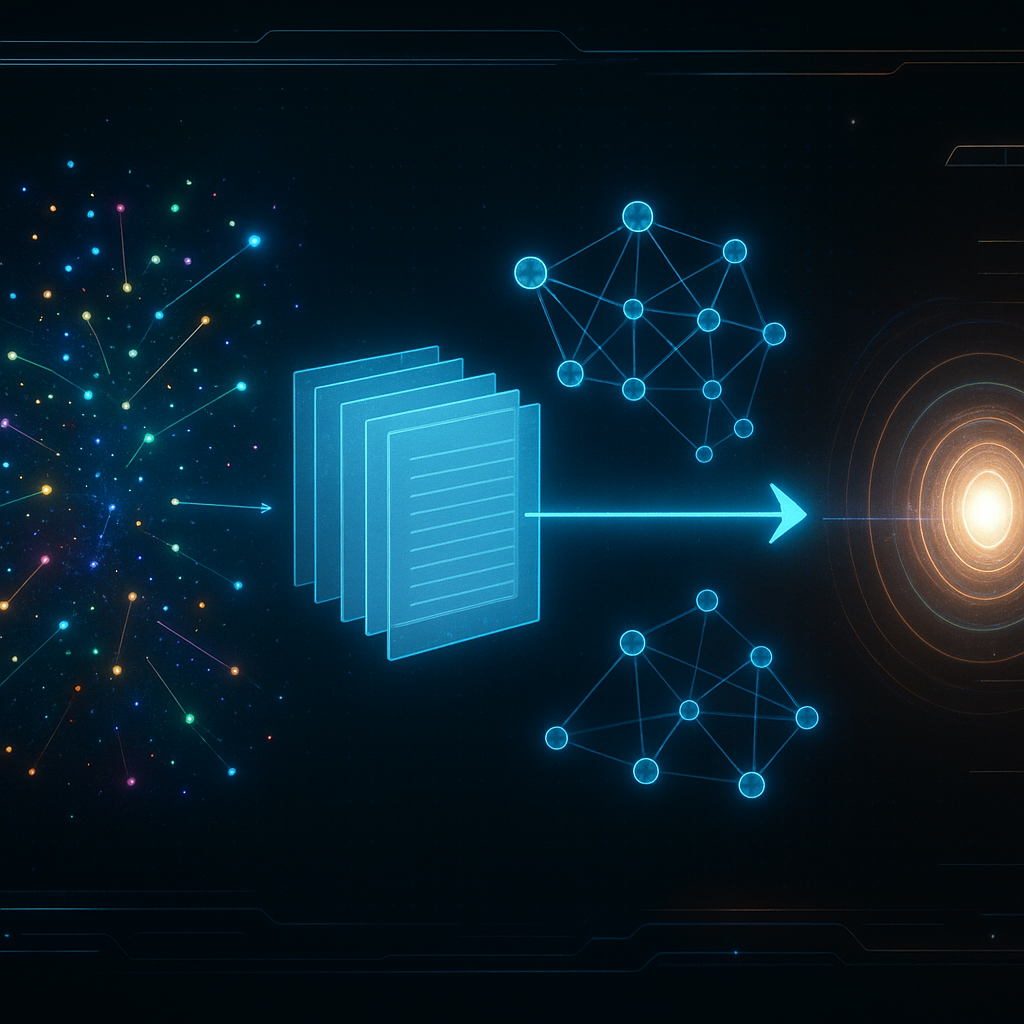
The process usually consists of the following steps: (1) preparation and chunking of source documents; (2) generation of embeddings for each chunk; (3) indexing of embeddings in vector storage; (4) when querying— generating the embedding of the query and searching for the nearest chunks; (5) transferring the found chunks to LLM as a context for generating a response.
In practice, the details are important: how to generate promptes (prompt engineering), how many results to give to the generator (top-k), and how to combine multiple sources (for example, gluing, ranking, filtering by confidence). Additional logic is also applied — filters based on metadata (document owner, date, relevance), as well as control over duplication of information in the context.
Practical implementation and tools
A set of proven tools is used to implement RAG solutions: vector search engines (FAISS, Milvus, Annoy, HNSWlib), cloud vector databases (Pinecone, Weaviate), and embedding generation engines (OpenAI, Cohere, Hugging Face). LLM (OpenAI GPT, Anthropic, Llama-shaped models, etc.) is used to generate the final responses.
The simplest pipeline looks like this: ETL -> chunking -> getting embeds -> saving to a vector index -> searching for nearest neighbors when querying -> combining found chunks -> submitting to LLM. Code hints: generate embeddings in batches, normalize vectors, store useful metadata (source_id, offset, timestamp) and use lazy index replication for scaling.
Best practices and pitfalls
A few practical recommendations: choose the size of the chunk based on the average length of the semantic unit in your area, apply an overlap of 10-20% to maintain coherence, and store the original metadata to trace the source. Use normalization and filtering of stop words before embedding where it is justified.
The main risks are "hallucinations" of the generator in insufficiently relevant contexts, outdated data in the index, and incorrect relevance ranking. Also consider the costs: storing and searching in a large database of embeddings requires RAM and index optimization. Monitor quality metrics such as the accuracy of responses, response time, and frequency of use of real sources.
Usage examples
RAG with an embedding index is widely used in: support services (answers from the knowledge base), corporate search engines (document search), generating responses to legal/medical queries with verifiable links and automatic summarization of large documents. In each case, it is important to ensure that sources can be verified.
For example, in technical support, the RAG system finds relevant procedures and instructions, and the LLM generates a response by inserting excerpts and links to original documents. This reduces the solution time and reduces the number of errors if you ensure the correct data indexing and updating pipeline.
Conclusion
Embeddings, chunks, and rags are a related set of techniques that together provide a powerful tool for creating systems capable of finding and reliably using relevant pieces of knowledge. Proper data preparation and a well-thought-out indexing architecture are critical for the quality of such systems.
Start with a simple prototype: prepare a small index, test different chunk sizes and search parameters, and only then scale. This will allow you to understand the trade-offs between accuracy, speed, and cost, as well as customize the system to meet real business requirements.


Related articles

When AI makes code more expensive: Why generation makes maintenance more expensive
From Machine Optimization to Token Optimization: How AI Agents are Changing Development

AI Salesperson: How a neural technician sells and increases conversion

AI Development: from fundamentals to business solutions and implementation

RAG in business: what is it and how to implement it — a step-by-step guide