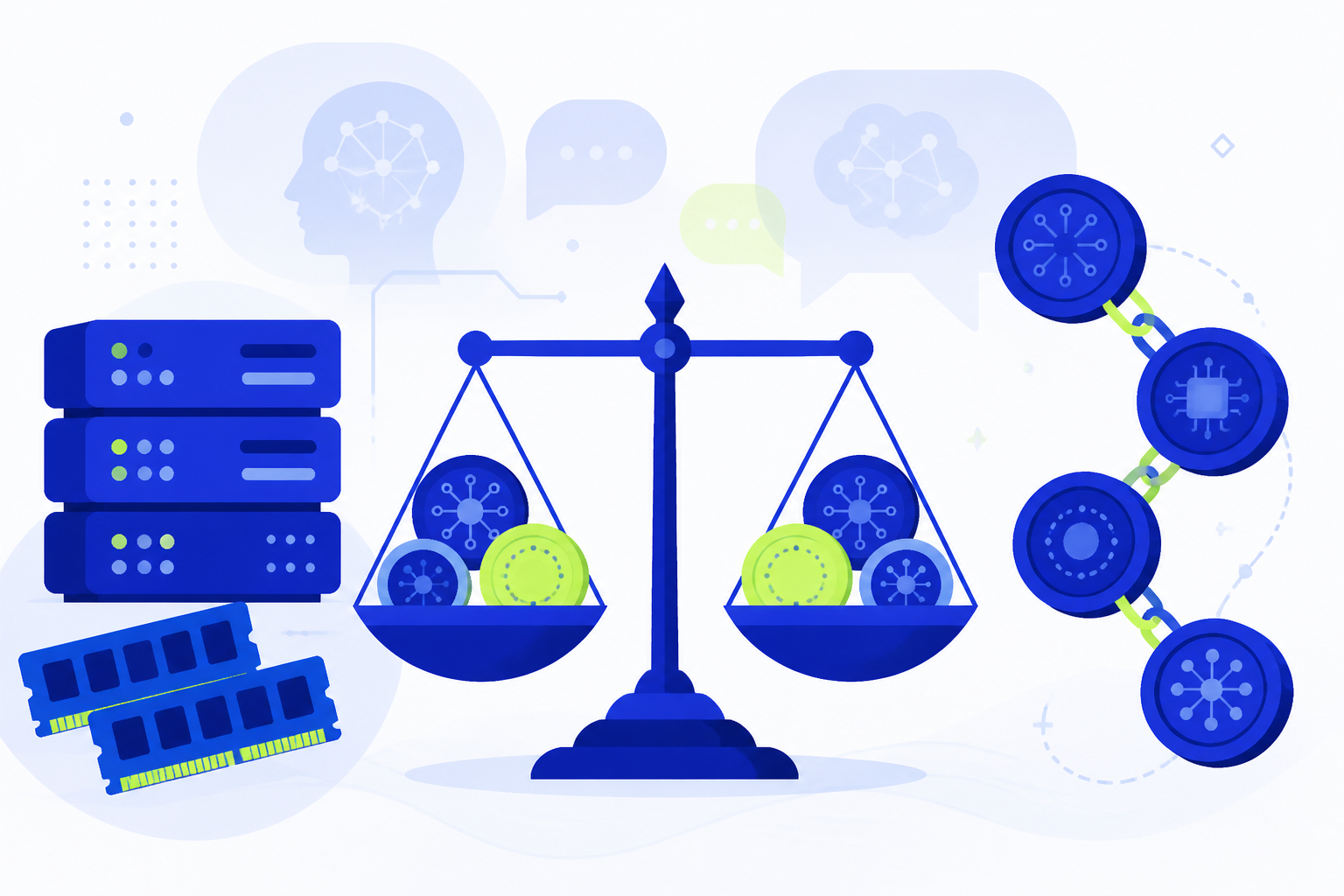
Which Telegram bot should I choose: in the constructor or in Python?


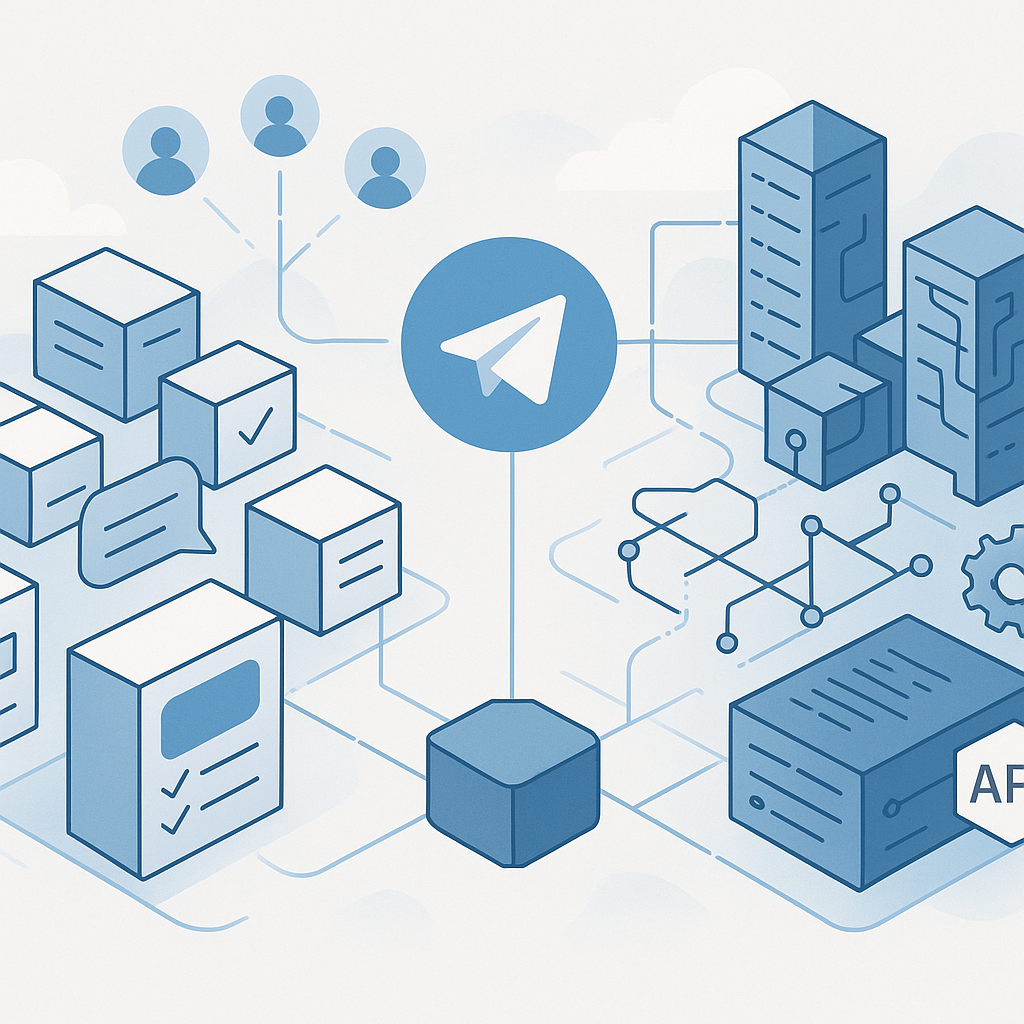
Content
Introductory part: "speed versus flexibility"
Choosing between a bot designer and custom Python development is almost always a choice between startup speed and the depth of adaptation to business processes. The constructor allows you to get results in a matter of days, often without programming. Python opens up full control: any scenarios, integration, scaling, but it takes time, competencies, and development discipline. The one who is looking for the "absolutely best" option is mistaken: it does not exist. The right one will be the one that suits your context — goals, deadlines, budget, security requirements, and growth plans.
A short summary in three phrases
Glossary of terms
Bot Constructor
Python bot
Integration
TCO (Total Cost of Ownership)
Vendor lock-in
152-FZ / GDPR
SLA
What is a "bot on the constructor"?
The constructor is a "Lego" for bots. You take ready-made blocks: greetings, menus, forms, payment, mailing lists, simple analytics. The advantages are obvious: fast launch, predictable subscription, minimum risks at the start. The disadvantages appear later: limited flexibility of scenarios, limitations on integrations, the complexity of implementing non-standard logic, the link to tariffs and the vendor's ecosystem. For small businesses and pilots, this is often the "golden mean": a clear budget and a short time-to-market.
What is a "Python bot"?
Python is a "blank canvas". We implement everything: custom scenarios, multistep processes, queues, deferred tasks, tricky integrations, proprietary recommendation algorithms, and complex payment schemes. Positive: maximum freedom, control over data and scaling, and no unnecessary restrictions. Cons: requires an experienced team, CI/CD, monitoring, security, support regulations. It takes longer to launch, and the initial costs are higher, but with 12-24 months on the horizon, ownership often turns out to be more profitable, especially with increasing workload and unique requirements.
Selection criteria: what is really important
The goal and the planning horizon.
The complexity of logic.
Integration.
Payments.
Scaling and load.
Analytics and data.
Ownership and compliance.
Risks and fault tolerance.
The team and the process.
Budget and TCO.
Security, ownership, and compliance
When a bot is just a showcase, and critical data lives in your CRM, the requirements are simpler. But if a bot collects personal data, makes payments, and stores order history, then the following are important: terminal logs, encryption, access control, logging of admins' actions, data storage and deletion regulations, registration of user agreements and privacy policies. In the constructor, some of the parameters are "cemented" by the platform. In Python, you design everything from the database schema to the backup policy and Disaster Recovery plan.
Economics: an example of calculating TCO for 1-2 years
Let's imagine online sales through a bot with a turnover of 1,500,000 ₽ per year.
Option A is a constructor.
105 000 ₽
Option B is Python.
180 000 ₽
230 400 ₽
50 400 ₽
210 000 ₽280 800 ₽
Typical scenarios and recommendations
Scenario 1. Small business, you need a quick payment acceptance and registration for services.
Scenario 2. Complex integrations: own CRM, ERP, bonus programs, non-standard calculations.
Scenario 3. MVP hypothesis: not sure about the model.
Scenario 4. High security and compliance requirements.
Hybrid approach: how to combine both worlds
A "hybrid" is often optimal: the user interface and quick scripts are done in the constructor, and the "heavy" operations are transferred to your backend via the API. This way you get the speed of visual assembly and the flexibility of your own logic. Important: make an agreement with the constructor supplier about API limits, SLAs, and the possibility of painlessly exporting data.
Pre-launch checklist
Describe the target logic and integration "on a napkin" (events, data, roles).
Determine where the "true" data will live: inside the platform or with you.
Check the export/import: format, frequency, completeness.
Specify the payment requirements: provider, fiscalization, refunds, and repeated charges.
Specify the requirements under 152-FZ/GDPR and the responsibilities of the parties.
Solve the issue of support: who responds to critical errors and how quickly.
Calculate the TCO for 12-24 months, taking into account the growth.
Common mistakes
Trying to "add another non-standard block" in the constructor when the project has obviously gone beyond the framework of the platform. To postpone the design of data "for later" — and then discover that the transfer of correspondence and order histories is impossible. Overestimate the "free" of the constructor: advanced functions and revolving commissions are changing the economy. Underestimate support: A bot is not a one—time page, but a live service with updates and incidents.
Results and roadmap of the choice
quick launchsimple processes
Control, integration, and scale
migration plan
A practical roadmap:
Formulate the bot's goals and KPIs (applications, sales, retention).
Check the functional requirements against the capabilities of the constructor. If >20-30% of the logic doesn't fit, switch to Python.
Estimate the TCO for 12 and 24 months. Consider the traffic growth and integration plans.
Make an architectural decision and document it: where is the data, how are the integrations going, who is responsible for support and incidents.
Get started and measure — decisions are supported by numbers, not just assumptions.


Related articles
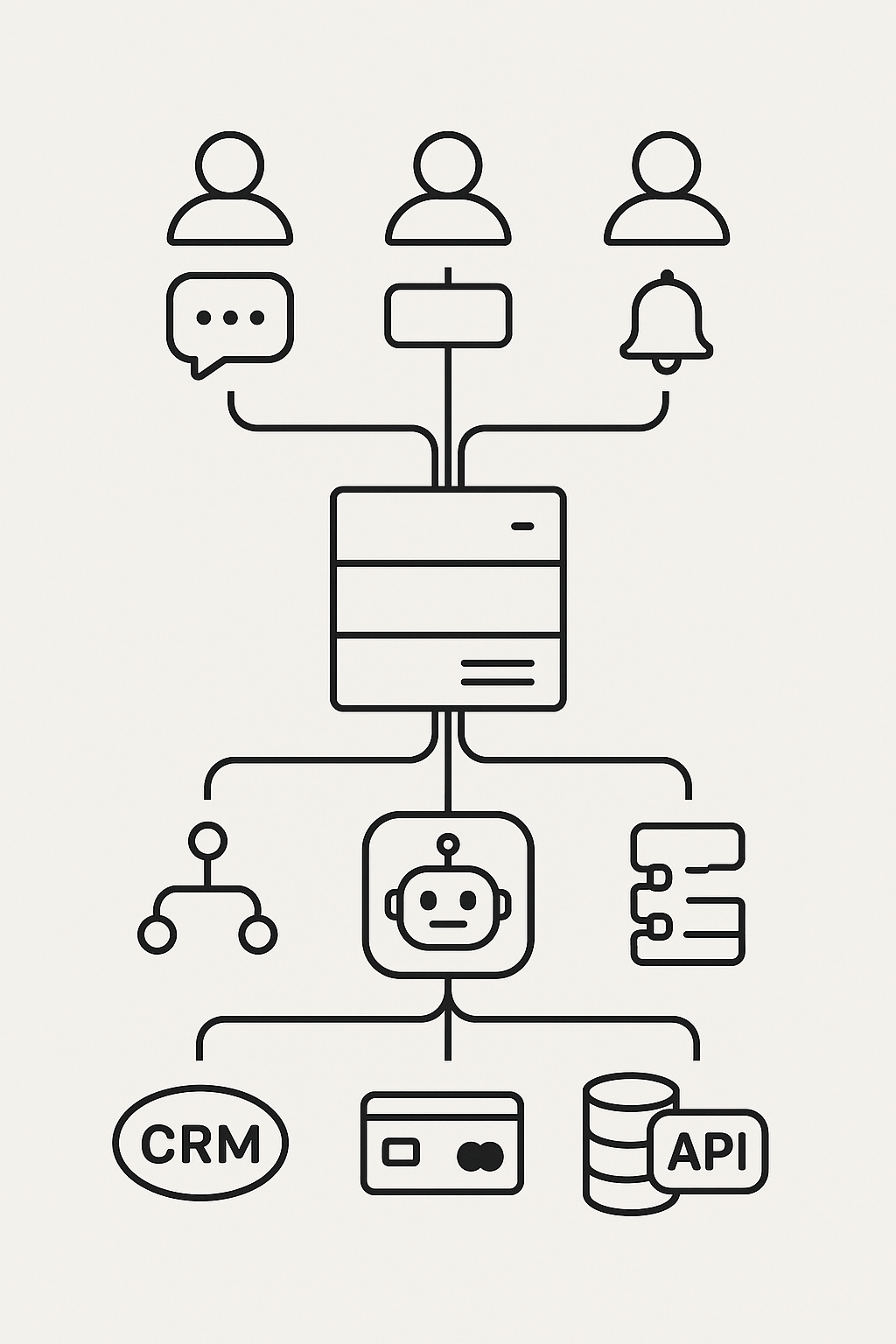
The cost of developing Telegram bots in Russia in 2025
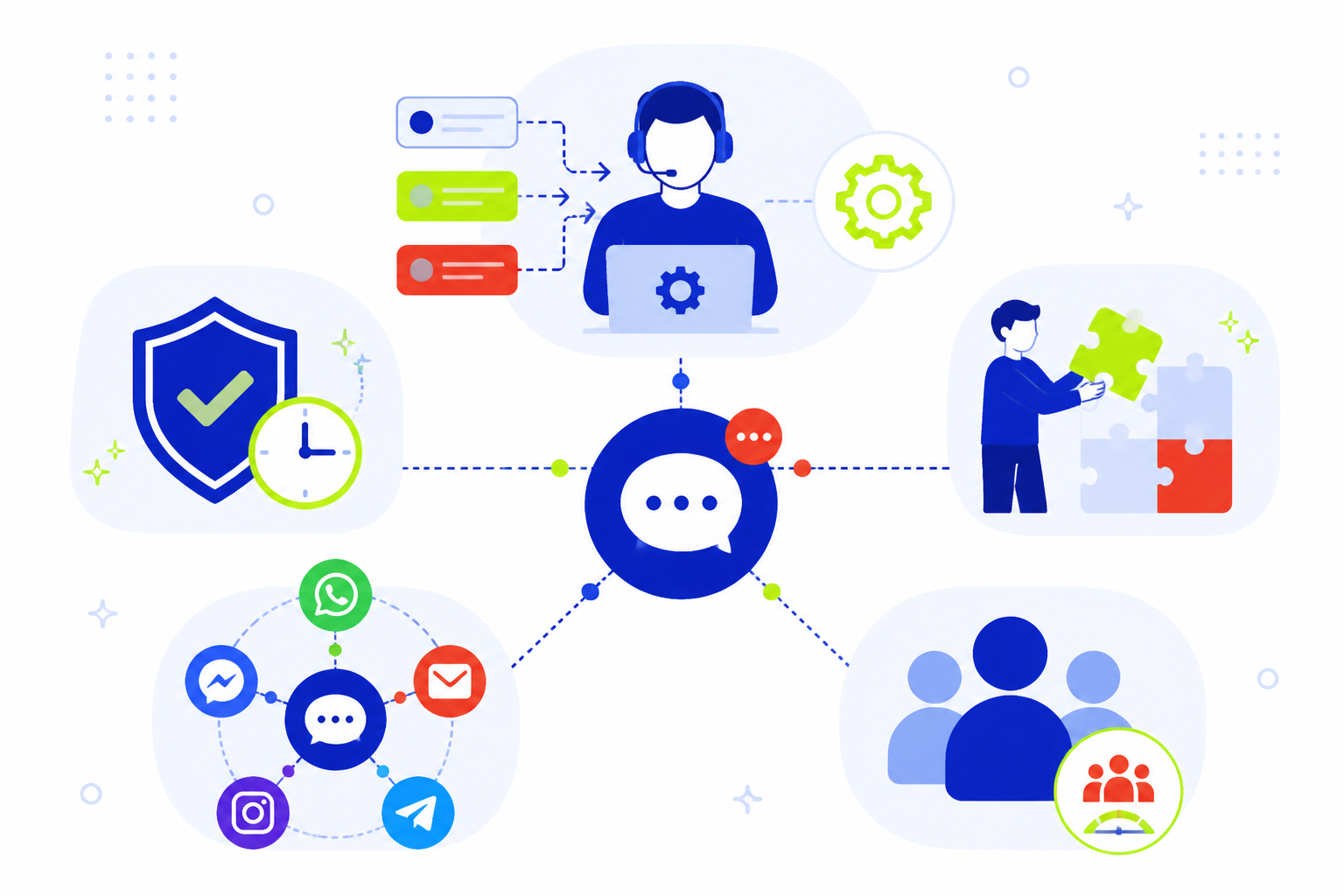
Top 5 Russian services for a free tech support bot in Max: an honest and detailed overview of tariffs

AI agent or chatbot: how to choose a business automation tool
Fine-tuning LLM: how to turn a model into a business partner
When AI makes code more expensive: Why generation makes maintenance more expensive