Telegram bot for business: higher conversion, lower costs. Why does the Telegram bot outperform the "classic" promotion tools?


Content
Introduction: changing the era of instruments
The digital landscape is changing, and customer habits are changing with it. They no longer want to "move" between sites, fill out long forms, install applications, and reauthorize. People prefer to solve problems quickly and in a familiar environment. Today, messengers are becoming such an environment: simple, understandable, with a minimum number of barriers. In this ecosystem, the Telegram bot is turning from an "add-on to marketing" into a central point of contact with the client — and is increasingly outperforming websites, social networks, mailing lists, and even Telegram channels in terms of effectiveness.
In B2B sales, this is especially noticeable: decisions are made not "based on emotions", but on the basis of information, convenience, and proven value. The content and product experience in the bot allow you to explain the benefits in advance, remove doubts and prepare the client for a conversation with the manager.
In short: what is a good telegram bot for business?
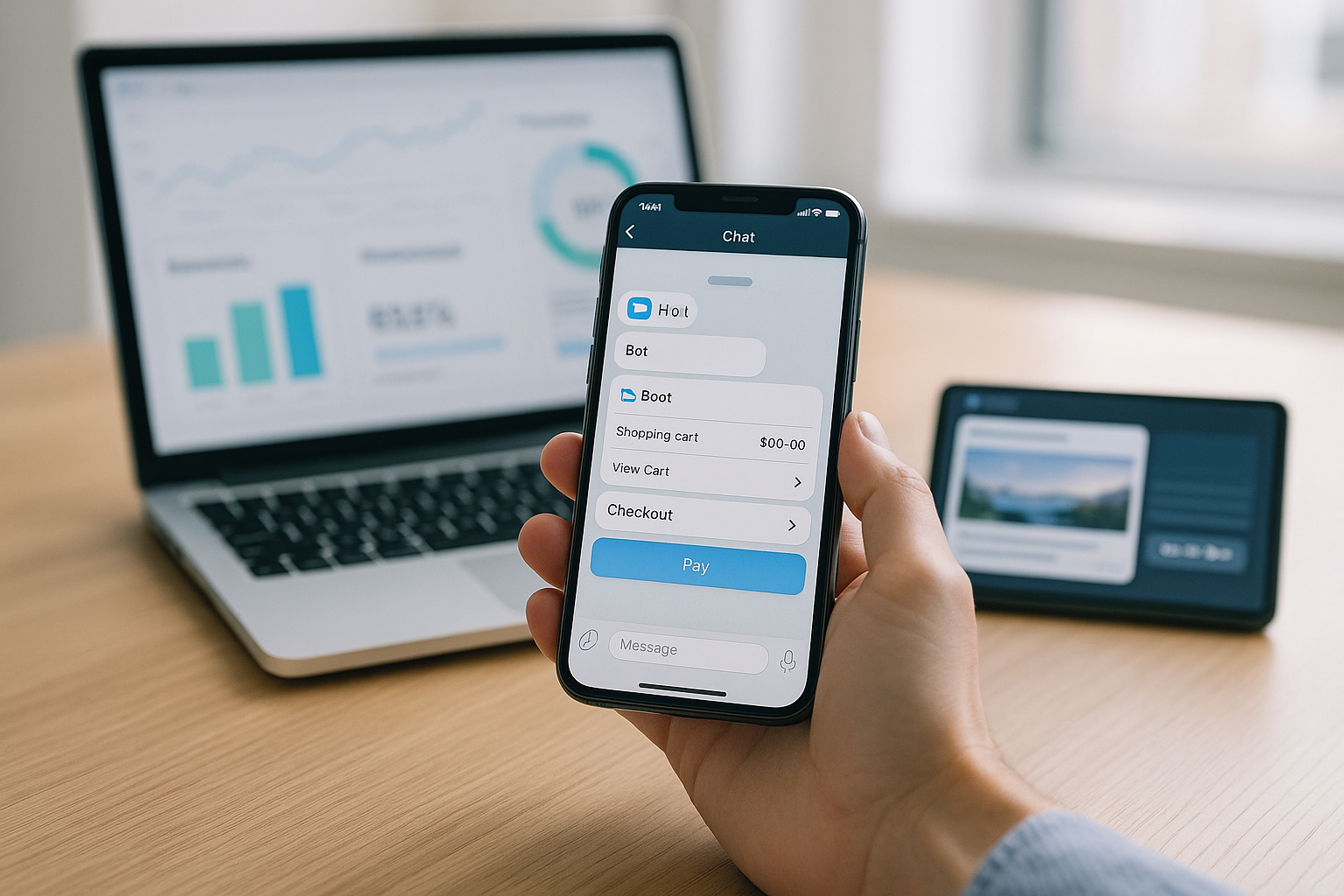
A telegram bot is a multifunctional service right in the messenger. The client does not need to download the application, remember passwords or understand interfaces. He clicks on the link or scans the QR code and immediately receives a "control panel" for his tasks: from booking to payment, from consultation to order status. The bot works stably even with weak Internet, shows only relevant information and does not overload the user with unnecessary information.
Comparison: bot vs websites, social networks, email and Telegram channels
Against websites
Websites are the "canvas" on which the visitor moves. On a weak connection, they take a long time to load due to heavy graphics and scripts; creating really convenient functionality for different devices is expensive. The bot, on the contrary, provides only the necessary steps and screens, adapting to the scenario. The result is fewer clicks, fewer bounces.
Against social media
Social networks help to reach the audience, but they are poorly suited for personalized scenarios: quizzes, calculations, bookings, payments. Inside the bot, these functions are "native": there is no need to take the user to external pages, where he may get lost or change his mind.
Against email newsletters
Email has been suffering from filters and user "blindness" for a long time: emails go to spam, and the openability drops. Messengers show significantly higher real viewing: messages are read here and now, without "postponing for the evening." In a bot, a message is not only a text, but also an interactive action: I clicked a button and received a response, an offer, a calculation, and an invoice.
Against Telegram channels
Channels are useful for reaching out, but they have few engagement tools: in fact, they are a feed without interactive blocks and personalization. The bot closes this gap: it forms individual proposals, collects data, guides through the funnel, answers questions and helps to carry out targeted actions.
The synergy of the bot and the Telegram channel
The right combination is a channel for coverage and content, a bot for interaction and conversion. A post in the channel "warms up", and the "Go to bot" button turns interest into action: record, purchase, consultation, request. In the bot, you can:
give out personal collections of materials after a short survey;
run quizzes and calculators (cost, timing, feed portions, training plan);
place orders and payments through integration with payment providers;
open access to private content by subscription.
As a result, the channel provides a stable flow of warm traffic, and the bot provides a controlled conversion rate and audience behavior data.
High conversion and "low friction"
The main secret of bots is the lack of friction. You don't need to install the app, create an account, or confirm your email. The user is already logged into Telegram, the interface is familiar, everything happens in a couple of clicks. Convenience and a sense of privacy reduce the psychological barrier: communication in the messenger does not cause "social tension", and the speed of responses and clear buttons create the effect of caring.
Economics: the cost of development and ownership
Developing a full-fledged mobile application is expensive and requires constant support: updates, compatibility, and teams of several specialists. Even complex websites with functionality often require significant development and infrastructure budgets. A bot is a noticeably more economical way to achieve the same goals.:
Low initial cost.
Cheap service.
No "hidden fees" for installation and marketplaces.
Better predictability of infrastructure.
Flexibility: quick edits, auto-updates, and analytics
Bots are easy to scale: you've added a step in the script, and you've got a new mini—feature. You have launched an autowork, and you systematically warm up leads without manual routine. You've connected analytics, and you're already testing hypotheses: where the user "falls", which CTA formulation works best, and how many steps are optimal in the questionnaire.
Restrictions and how to get around them
Limited visual "wow" compared to apps.
Dependence on the Telegram platform.
Not all tasks are convenient in the chat.
Roadmap for the implementation of the bot
Formulate a business goal.
Describe the scenarios.
Prepare the content.
Integration.
MVP-launch and measurement.
Iterations.
Brief case scenarios by industry
Restaurant.
Education.
Retail.
Service for pets.
Dictionary of Terms
Telegram bot.
Auto funnel.
Conversion rate.
MVP (Minimum Viable Product).
KPI (Key Performance Indicator).
Result
Telegram bots converge in three important ways: speed, convenience, predictable economy. Websites and social networks remain in the arsenal, but the role of the "client task management console" is moving to the messenger. The combination of "channel for coverage + bot for action" creates a shortcut from interest to result. For companies, this means higher conversion rates, lower development and support budgets, and most importantly, the ability to quickly test hypotheses and systematically warm up customers on the way to a deal. In a world where time is the main currency, those who know how not to complicate win.


Related articles
The cost of developing Telegram bots in Russia in 2025
Top 5 Russian services for a free tech support bot in Max: an honest and detailed overview of tariffs

AI agent or chatbot: how to choose a business automation tool
AI for Avito: how not to lose customers because of long answers
AI chatbot in Avito: the first line of support for product consultations