How Corporate AI Agents are Changing Business: Application Scenarios and Benefits


Introduction
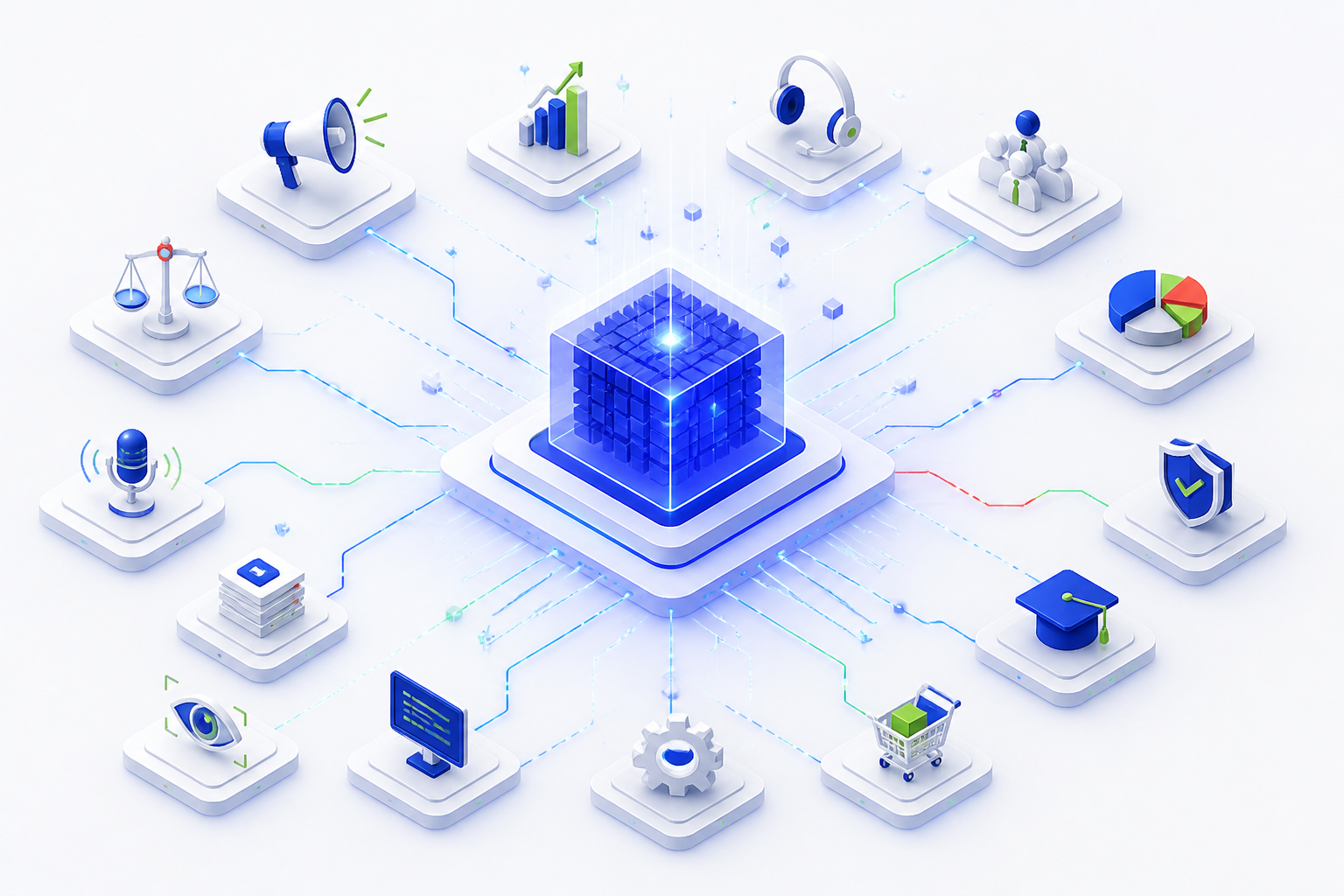
The AI agentconnected toolsERP
For businesses, this means a reduction in manual routine, faster processes, and a more sustainable quality of work. If an employee spends 30-40 minutes searching for information, checking documents, or preparing a sample letter, an AI agent can reduce this time to a few minutes. Across the department, these savings translate into hundreds of hours per month, and across the company, into a significant competitive advantage.
which processes should be automated first?
AI agent for marketing: from campaign idea to result analysis
Marketing teams often work under constant pressure: they need to release content, test hypotheses, analyze channels, prepare presentations, and respond quickly to changes in demand. An AI agent can become a central assistant that collects data about a product, audience, and previous campaigns, and then offers ideas for advertising messages, media plans, and content series.
In a practical scenario, the marketer writes: "Prepare a campaign to promote the corporate application automation service." The agent generates the USP, header options, landing page structure, email chain, and forecast for key metrics. He can then compare the actual results with the forecast and explain why one segment performed better than the other.
AI Sales agent: lead qualification and preparation for the call
Such an agent helps the manager not to start a conversation from scratch. Before the call, he prepares a brief dossier: industry, business size, possible needs, similar cases, likely objections, and recommendations for the first message. This is especially useful in B2B sales, where the quality of training directly affects the customer's trust.
Example: CRM receives an application from a manufacturing company. The agent determines that the client has several branches, and probably has tasks related to application accounting, logistics, and document management. The manager receives a prompt: "Start by discussing the speed of order approval and transparency of statuses between departments." This approach increases the chance of a meaningful conversation already on the first contact.
Support chatbot: quick responses without loss of service quality
search for the answer in the knowledge basetransfer the dialog to the operator
Service Level Agreement
In one typical case, the company reduces the load on the first line of support by 25-40% by automating recurring issues.: access restoration, application status, setup instructions, document verification. At the same time, the client receives an answer immediately, and the operators are engaged in more complex and valuable tasks.
AI Agent for HR: candidate selection and employee adaptation
HR departments work with a large amount of text information: resumes, vacancies, cover letters, interview results, internal regulations, and training materials. An AI agent can speed up recruitment by helping to analyze resumes, compare candidates' experience with job requirements, and prepare interview questions.
For example, a recruiter uploads a job description for a project manager. The agent identifies key competencies, checks candidates' resumes, explains the strengths and weaknesses of each profile, and forms a short list. At the same time, it is important that the final decision remains with the person: AI should help, and not turn into an opaque filter.
Another scenario is the adaptation of new employees. The agent answers the newcomer's questions about corporate rules, vacations, paperwork, access, team structure, and internal services. This reduces the burden on HR and managers, and the employee begins to navigate the company faster.
AI agent for accounting: document management automation
OCR
Let's imagine that the supplier has sent an invoice, an act and an invoice. The agent recognizes the documents, checks the INN, contract number, amount, VAT, date and compliance with the order. If everything matches, he submits the set for approval. If there is a discrepancy, for example, the amount in the statement differs from the amount in the invoice, the agent creates a task for the responsible employee and briefly describes the problem.
The practical effect appears quickly: less manual entry, fewer lost documents, faster closing of the period. For companies with a large flow of primary documentation, savings can be measured in tens of hours per week, especially if the agent is integrated with an electronic document management and accounting system.
Legal AI Agent: contract verification and risk reduction
Legal departments often encounter model contracts, supplementary agreements, NDAs, claims, and regulations. An AI agent can perform primary document analysis: find non-standard conditions, compare text with corporate templates, identify risks, and suggest formulations for edits.
For example, a manager downloads a contract from a counterparty. The agent verifies the terms of payment, the liability of the parties, the termination procedure, the terms of services, fines and jurisdiction. If a risky formulation is found, he explains it in simple language: "The supplier can change the cost unilaterally without additional approval."
Such an agent does not replace a lawyer, but removes part of the preliminary check from him. Instead of reading the document from scratch every time, the specialist receives a risk map and focuses on the really important points. This speeds up the negotiation of contracts and helps businesses not to lose deals due to lengthy legal procedures.
AI assistant for the internal knowledge base
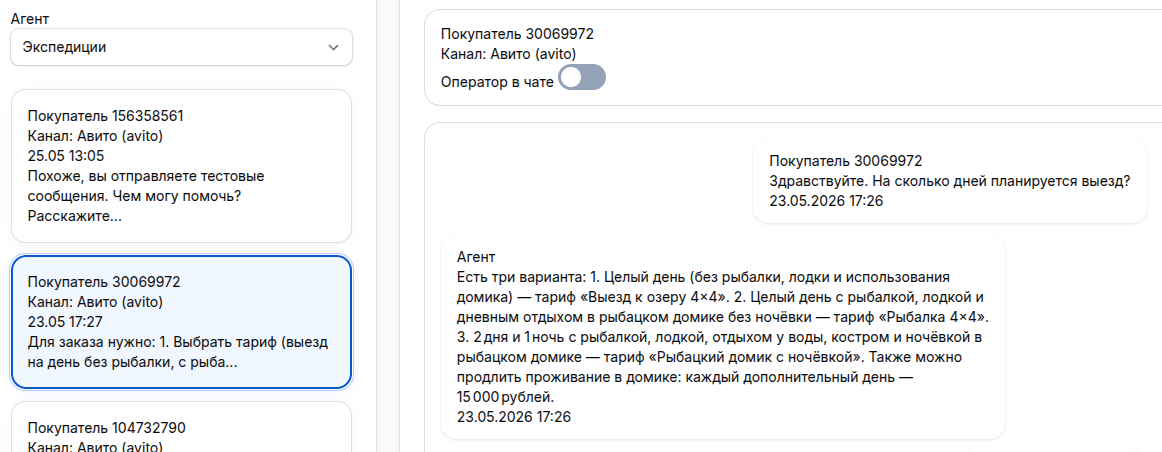
In many organizations, knowledge is scattered across folders, corporate portals, chats, presentations, and old regulations. Employees spend their time not working, but searching for answers: where to get a contract template, how to arrange a business trip, who is responsible for accessing the system, and what is the procedure for approving purchases.
The AI assistant for the knowledge base solves this problem through a dialog interface. The employee asks the question in the usual language, and the agent searches for an answer in approved sources, shows a brief extract and gives a link to the document. If there is no information or it is contradictory, the agent can fix the gap and send a request to the owner of the process.
Request example: "How do I coordinate participation in the conference?" The agent answers: what documents are needed, who approves the budget, how many days do I need to apply, and where is the form. This is especially valuable for large companies, where even experienced employees do not always remember all the internal procedures.
AI agent for analytics and management reporting
Managers want to see not just tables, but clear conclusions.: what is happening with sales, why expenses have increased, which customers are leaving, and where the implementation of the plan is slowing down. An AI agent for analytics connects to BI systems, databases, and reports, turning dry numbers into managerial insights.
BI
The agent can generate a weekly summary for the director: key changes, deviations from the plan, probable causes, risk areas, and suggestions for action. Unlike a regular dashboard, it does not wait for a person to notice a problem, but highlights an important thing: "In the small business segment, the conversion from an application to a payment decreased by 12%, the main failure is at the stage of submitting a commercial offer."
Voice AI agent for a call center
ASRTTS
For example, a customer calls to find out the delivery status. The agent recognizes the order number, checks the logistics system and responds with a voice: "Your order has been delivered to the courier, expected delivery today from 16:00 to 18:00." If the client wants to change the address or complains about a problem, the agent transfers the call to the operator and transmits the conversation history to him.
A separate scenario is conversation quality control. The agent analyzes call recordings, determines the client's emotions, identifies script violations, and records frequent reasons for calls. The call center manager does not receive a random sample of 20 calls, but a systematic picture of thousands of conversations.
Computer vision in production and retail
Computer vision is an AI field that allows systems to analyze images and videos. In production, such agents help to identify defects, monitor safety, monitor the availability of personal protective equipment and verify compliance with technological operations.
On the packaging line, the agent can compare the product image with the reference: whether the label is correct, whether there is damage, whether the code is applied correctly, whether the box is filled. If a deviation is detected, the system stops the batch or sends a signal to the operator. This reduces the risk of marriage and reduces dependence on the fatigue of human attention.
In retail, computer vision helps to control the layout of goods, queues, availability of products on shelves and the operation of the cash register area. For example, an agent sees that a popular product has run out on the shelf, even though it is in stock, and automatically creates a task for an employee of the sales floor. For a chain of stores, this scenario directly affects revenue: a product that is not visible to the customer is not actually sold.
AI Agent for IT Service Desk
The IT Service Desk processes a lot of requests every day: forgotten passwords, access problems, mail failures, software installation requests, hardware problems. A significant part of such applications are standard, but it still requires the time of specialists.
ITSM
Example: An employee writes "VPN is not working". The agent clarifies the device, the operating system, and the error text, checks for a massive incident, and suggests recovery steps. If the problem is not solved, the engineer does not receive an empty message, but a structured application. This reduces the first reaction time and increases the satisfaction of internal customers.
AI agent for procurement and supply
Procurement requires a balance between speed, price, quality, and compliance with procedures. An AI agent can help in finding suppliers, comparing commercial offers, verifying conditions, analyzing purchase history, and preparing justifications for selection.
For example, the department needs to purchase laptops for new employees. The agent collects requirements, compares supplier offers, and takes into account warranty, delivery time, compatibility with corporate standards, and previous experience working with contractors. Then he forms a comparison table and a short recommendation.
In a more complex scenario, the agent monitors supply risks: supply delays, price increases, dependence on one supplier, and changes in payment terms. He can warn the manager in advance: "For this category of goods, 78% of purchases are from one supplier, and the last delivery was delayed by 9 days." Such a warning helps to act before the problem becomes critical.
AI agent for employee training
Corporate training often suffers from two extremes: either the materials are too general, or the employee is left alone with long courses and regulations. An AI agent can personalize training to fit a person's role, experience, department, and real-world tasks.
For example, a new sales manager is undergoing adaptation. The agent explains the product, asks verification questions, models dialogues with clients, analyzes objections and offers materials on exactly those topics where the employee makes mistakes. The supervisor receives a report not only on the fact of completing the course, but also on the weaknesses in the training.
For technical teams, an agent can work as a mentor: explain internal development standards, help search for documentation, sort out errors in the code, and suggest the release order. As a result, knowledge becomes not an archive "just in case", but a living tool for daily work.
AI agent for security and compliance
Compliance is compliance with the requirements of laws, industry standards and internal rules of the company. In large organizations, monitoring these requirements becomes a difficult task.: Documents, operations, communications, and access are constantly changing. The AI agent helps to track deviations and prevent risks.
In the field of information security, an agent can analyze events from monitoring systems, group similar incidents, determine priority, and propose a response plan. If an employee suddenly downloads an unusually large amount of files or tries to access a private folder, the agent highlights the event to the security specialist.
In compliance scenarios, the agent checks documents and processes for compliance with internal policies: whether the approval is correct, whether there is a conflict of interest, whether the limits of authority are met. It doesn't replace the security service, but it helps them see more and react faster. Where a person is forced to view data arrays manually, the agent becomes an attentive observer who does not get tired and does not miss repetitive signals.
Corporate AI agents are especially valuable where large amounts of information, repeatable processes, and the need for quick solutions combine. You should start with scenarios where you already have clear data, measurable metrics, and process owners. Then AI becomes not a fashionable add-on, but a working mechanism that saves time, increases transparency and helps the company to act faster.
 Автор
Антон Амосов
Автор
Антон Амосов