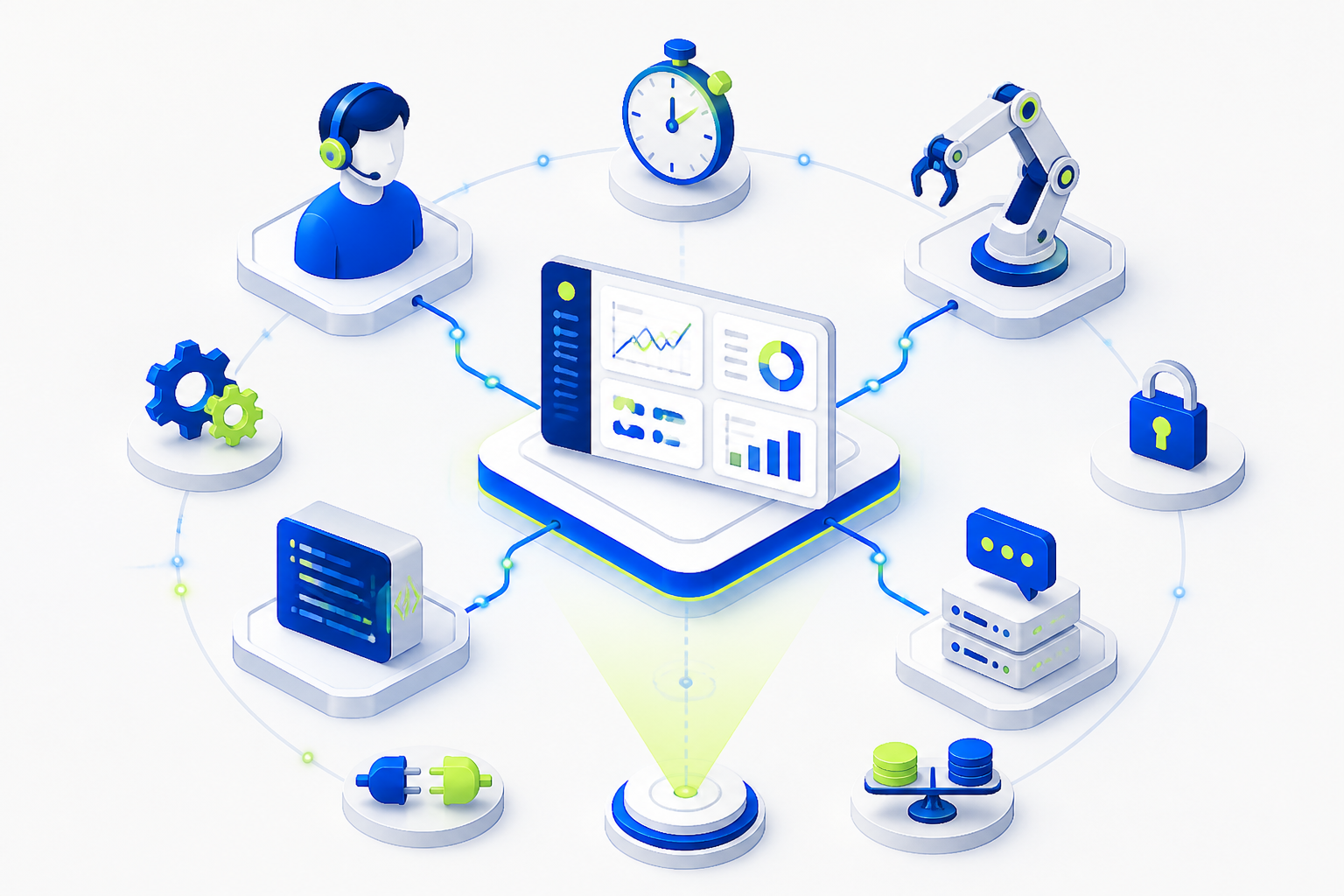
Smart AI Website Widget: Respond to customers instantly and increase conversions


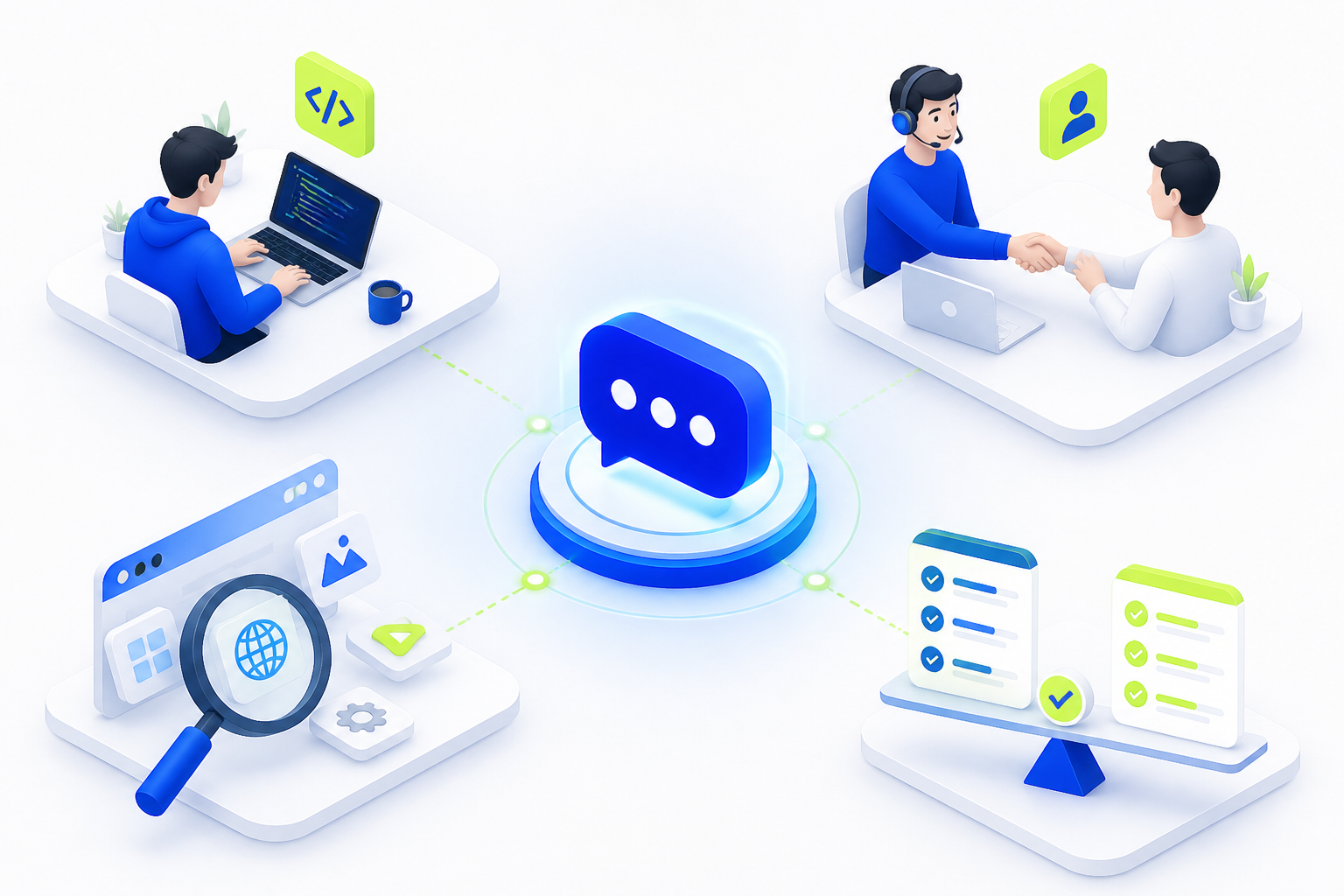
Customers are less likely to wait for a manager's response for several hours. They come to the website, read the description of the service, study the tariffs, compare the conditions — and at that moment they have questions. If there is no immediate response, some of the applications go to competitors. A smart AI widget on the site solves this problem: it communicates with visitors in the usual chat format and responds not with general phrases, but based on the real content of the site, the knowledge base and prepared materials of the company.
This widget is especially useful where businesses have a lot of recurring issues: delivery terms, connection procedure, service composition, restrictions, documents, deadlines, cost, product features. In fact, this is a first-line digital consultant who does not get tired, does not miss calls at night and helps the client to reach a decision faster.
Independent implementation
Self-implementation of an AI widget looks attractive to companies that have a strong technical team and a desire to fully control the architecture of the solution. In this scenario, the business designs the chat itself, connects the language model, sets up data collection from the site, creates a knowledge base, and thinks through the logic of responses. On paper, everything looks simple: we take the content of the site, send it to the AI and get answers. In practice, there are many technical nuances.
vector databaseprocessing of personal data
For example, a company with a 500-page catalog may quickly come across the fact that some of the information is outdated, the same conditions are described in different words, and several pages indicate different service deadlines. In such a situation, the AI widget will begin to "honestly" rely on the data found, but if the database itself is contradictory, the answers will also be ambiguous. Therefore, before launching, it is necessary to conduct a content audit, and this is not only technical, but also editorial work.
The advantage of an independent approach is flexibility. You can choose any model, any database, any integration scenarios. Minus is the cost of ownership. Even if development seems like a one-time task, after launch, there are costs for support, improvements, monitoring, updating content, correcting errors, and adapting to site changes. This is often too difficult a route for small and medium-sized businesses.
Freelancers' help
The second way is to hire freelancers or a small team of contractors. This option is chosen by companies that want to get an individual solution, but do not have their own design. A freelancer can build a prototype widget, connect the language model API, add a simple knowledge base, and post a chat on the site. At the initial stage, it may actually look faster and cheaper than full-fledged internal development.
However, the result strongly depends on the performer's qualifications. One specialist writes interfaces well, another knows how to work with the server side, and the third understands vector search and RAG. A high-quality AI widget requires all these competencies at once. If they are closed by one person, it is important to assess in advance how sustainable the solution will be.: what happens when the number of requests increases, who fixes the error in three months, and how to update the knowledge base where customer data is stored.
transfer the dialog to the manager
There is also an organizational risk. If a contractor disappears, changes their specialization, or stops supporting the project, the business is left with a technical solution that is difficult to develop. The documentation is often incomplete, the code may be tied to the personal settings of the performer, and updating the knowledge base requires manual actions. As a result, the company seems to have received an AI widget, but each change turns into a separate mini-development.
The help of freelancers can be justified if you need an experiment, MVP, or non-standard integration. But for regular work with clients, it is better to lay down the requirements in advance: a clear admin panel, the ability to edit the knowledge base without a programmer, a log of dialogues, quality control of responses, an easy way to install a widget on the site and a clear support scheme.
Internet Service Search
The third option is to use a ready—made Internet service to create an AI widget. This is the most practical way for companies that need to get results quickly without a long development cycle. A good service covers several tasks at once: collecting information, creating a knowledge base, connecting AI, configuring a widget, installing on a website, and further administration.
When choosing a service, it is important to look not only at the beautiful chat interface. The key question is how exactly the system works with the site content. If the widget responds only based on predefined scenarios, it's more like a classic chatbot. A smart AI widget should be able to use website materials, find the right fragments, and generate natural responses. At the same time, the answers should be manageable: it is important for businesses to understand which texts are included in the knowledge base and what exactly the widget will use in consultations.
It is worth paying attention to several criteria:
- Creating a knowledge base on the site.
- Editing before publishing.
- Easy widget installation.
- Quality control.
For a business, the scenario is especially valuable when a marketer, sales manager, or support specialist can update information himself without involving a developer. For example, the cost of the service has changed, a new FAQ section has appeared, or the delivery terms have been updated. If these changes can be quickly made to the knowledge base, the widget remains relevant and does not mislead customers.
The Internet service also lowers the barrier of entry. Instead of several weeks of development, the company can launch the first version in a short time: collect content, test it, connect the website channel and start receiving dialogues. This does not eliminate the need to think about the quality of the texts, but removes most of the technical routine.
Our solution is the Softrestchat service
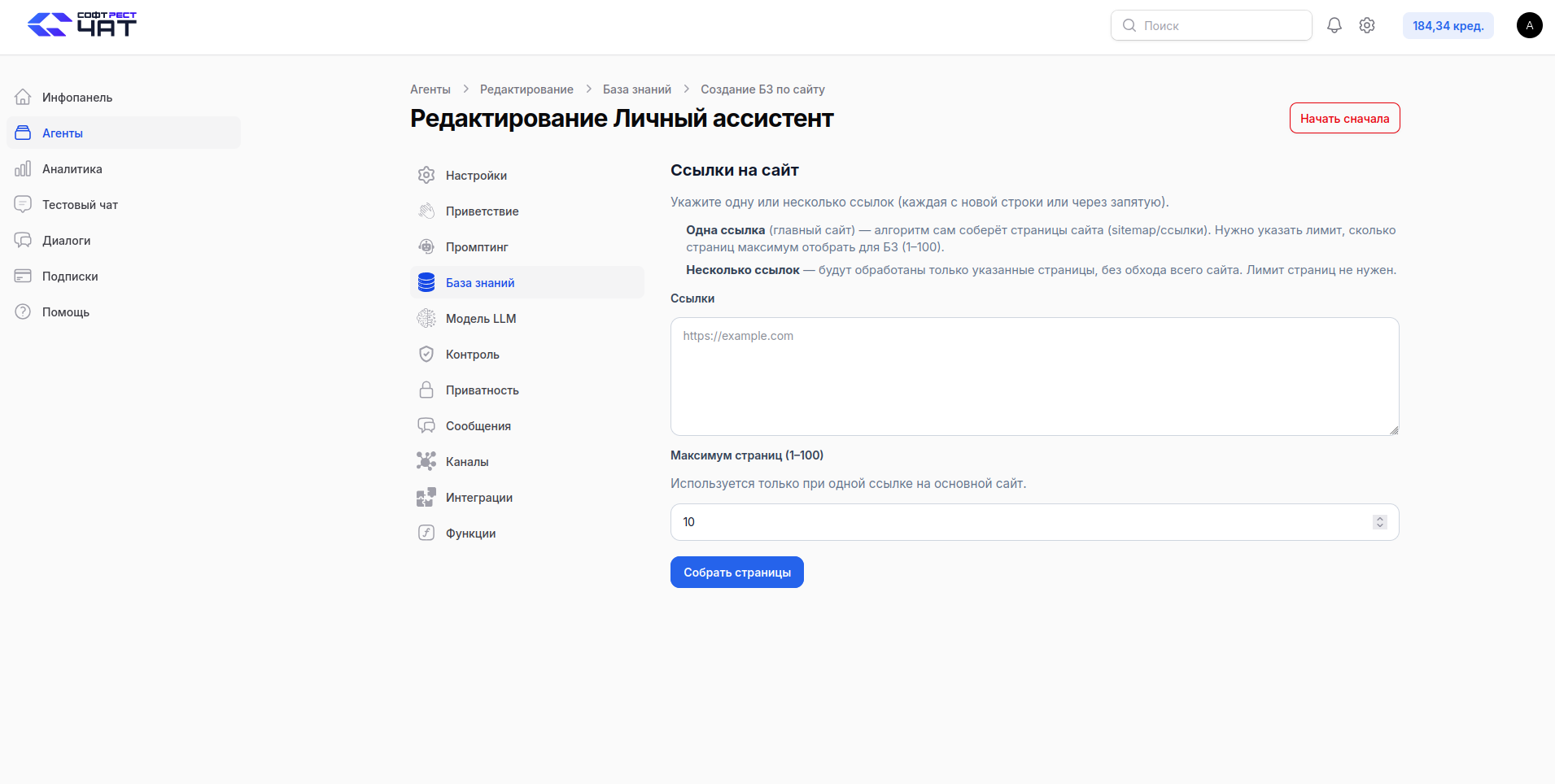
Softrestchat allows you to create a smart AI widget for a website in an automated format. The solution is suitable for companies that want to respond to customers based on their own content, but do not want to build the entire infrastructure from scratch. The service helps to collect data from the site, prepare it for the RAG knowledge base and connect the widget to the site in a standard way.
"Agents → Editing → Knowledge Base → Creating a business plan for a website"
After collecting the information, the texts can be edited before being sent to the RAG knowledge base. This approach reduces the risk of inaccurate answers. For example, if there is an advertising phrase on the site "quickly connect the service", it can be replaced in the knowledge base with a more specific one: "a regular connection takes from one business day after access is granted." Such specifics are more useful for the client, and safer for the manager, because expectations become realistic.
"Agents → Editing → Channels → Connecting a website"an intelligent communication channel
For a website, it is also an element of trust. The visitor sees that the company is ready to respond immediately, does not hide information and helps to understand the product. A well-configured AI widget works like an attentive consultant: it does not pressure, does not interrupt, does not force you to search for the right page manually, but carefully guides the person to the next step.
Comparison
The choice of implementation method depends on resources, deadlines, and the required level of control. Independent implementation provides maximum freedom, but requires a team and constant support. Freelancers help you assemble an individual version faster, but the quality and sustainability of the solution depend on the specific performers. The ready-made service reduces the technical complexity and allows you to quickly move from an idea to a working tool on the site.
If we compare these options from a business perspective, the picture looks like this:
- Self-development
- Freelancers
- Online service
- Softrestchat
Let's imagine a typical case. The company provides B2B services. The website contains descriptions of solutions, tariffs, answers to frequently asked questions, and several landing pages. Managers receive similar requests every day.: what is included in the service, how is the connection going, what data is needed to start, and whether it is possible to adapt the solution to a specific task. Without an AI widget, the client either searches for answers on their own, or leaves a request and waits. With the widget, he receives an initial consultation immediately, and the manager receives a more prepared request.
According to the observations of companies implementing automation of client communications, even partial processing of standard issues significantly unloads the first line of support. It is important not to promise magic: AI should not answer everything and replace an expert where an individual calculation or a legally significant decision is required. But in the role of a website navigator, a consultant on standard terms and an assistant for primary qualifications, he works effectively.
Softrestchat makes this path clearer: first, the site data turns into a managed knowledge base, then the company checks and edits the texts, after which the widget connects to the site through the standard channel settings. This approach helps to maintain a balance between automation and control. The AI responds quickly, but relies on prepared materials, and the business retains the ability to control exactly what will be said to the client.
A smart AI widget based on website content is not a decorative element or a fashionable toy. It is a working tool that increases the availability of information, shortens the client's path to a solution, and helps the team focus on more valuable conversations. The better the knowledge base is prepared, the more accurate the answers are, which means the higher the visitor's trust in the company even before the first call.
 Автор
Антон Амосов
Автор
Антон Амосов


Related articles
A chatbot in simple words: what is it and what is it for?

GPT-6 Astra: a breakthrough to AGI or thoughtful marketing?

Top 10 platforms for building AI agents: what's inside each service
How to create an AI agent: clear architecture, tools, and typical errors
AI Agent Constructor: what is really possible to assemble without a programmer and where is the code needed?