A chatbot in simple words: what is it and what is it for?


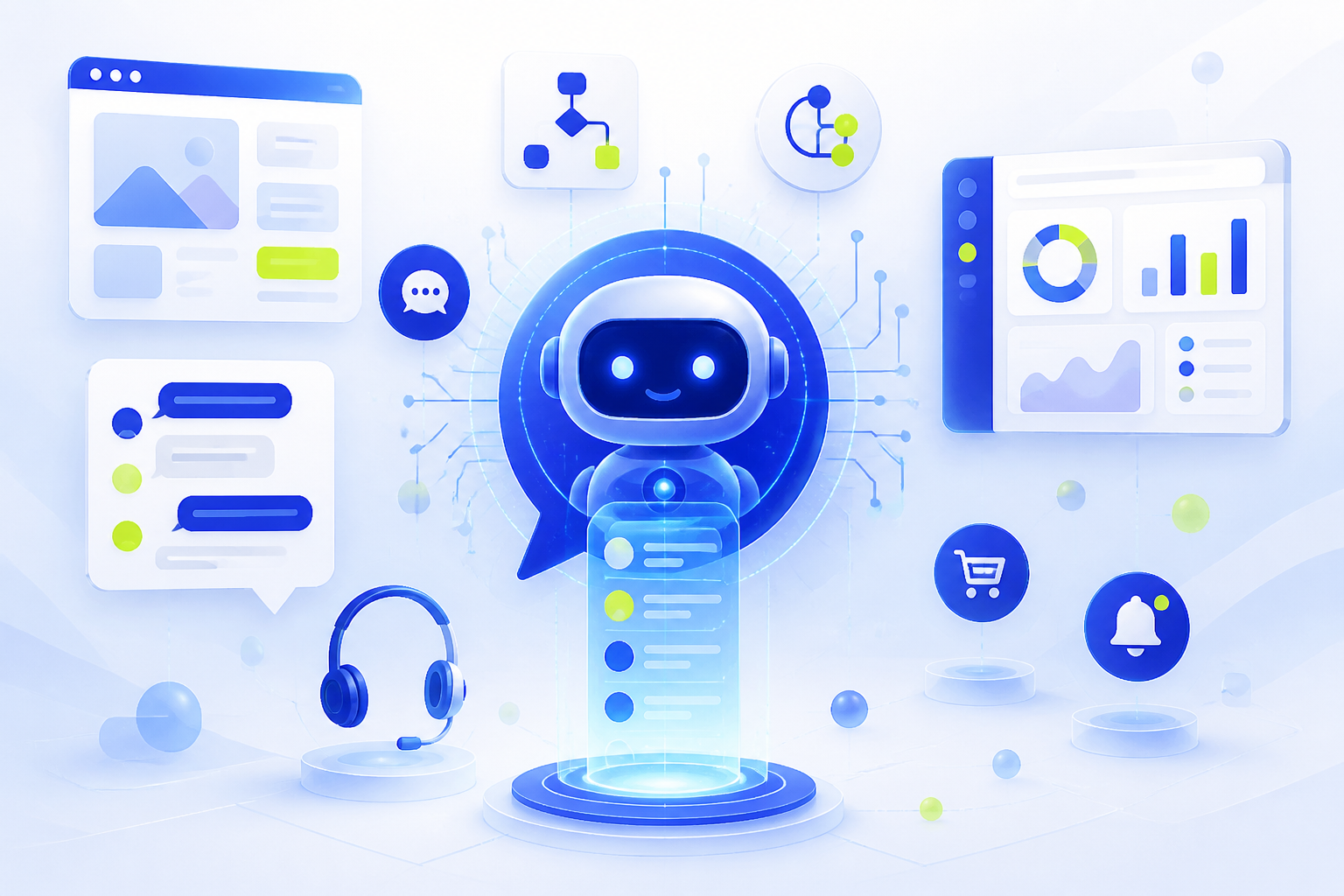
Short definition
Chatbot
chatbot
It is important not to confuse a chatbot with a live employee. A bot does not "think" like a human in the everyday sense of the word. It processes the message, matches it with rules, scenarios, or knowledge, and returns a suitable response. In simple bots, it's like moving on a pre-drawn map. In more flexible AI solutions, it is aimed at searching for an answer in the knowledge base, taking into account the context of the conversation.
Chatbots are used where there are a lot of repetitive questions and actions: find out the work schedule, choose a service, leave a request, make an appointment for a consultation, receive instructions, check the status of the request. They are not required to replace a person — most often they take over the first line of communication and help bring the user to the result faster.
A simple example
Imagine that a client visits the clinic's website and writes to the chat window: "I want to make an appointment with a therapist tomorrow night." The bot receives the message, determines the user's intention to make an appointment, clarifies the missing details, such as a branch office or a convenient time, and then suggests available options.
If the bot is scenario-based, it can guide a person by clicking on the buttons: "Select a specialist", "Select a date", "Leave your phone number". If the bot understands free text, the user can write in ordinary words, and the system itself will highlight the meaning: doctor — therapist, day — tomorrow, time — evening. After that, the bot either responds or performs an action: creates a request, sends a notification to the administrator, or transmits the dialog to the operator.
In practice, one simple dialog may look like this:
User:
Bot:
User:
Bot:
In this example, the bot does not just give out a prepared phrase. He understands the topic of the question, clarifies the parameter and helps the person to move on. The better the rules, knowledge base, and scenarios are prepared, the more natural such a dialogue looks.
Where do chatbots meet?
Chatbots have long ceased to be a rarity. The user may not know the term, but they regularly encounter such programs: when ordering food, making an appointment at a salon, contacting a bank, searching for delivery status, or choosing a tariff. The bot becomes a familiar entry point — like a "Call" button, only in the format of a conversation.
On websites, a chatbot usually appears as a small widget in the corner of the screen. His task is to tell you where to go, answer your frequently asked questions, collect a contact, or help you choose a service. Such a bot is useful for business because it does not force the visitor to search for information on the site menu, especially if there are many pages.
searches for the answer in the database
The main types
Chatbots differ not in appearance, but in how they understand the user and decide on the next response. From the outside, it is almost always a correspondence window. Inside, there may be a simple chain of buttons, a set of rules, artificial intelligence, or a combination of several approaches.
Push-button and scenario bots
Bots based on keywords and rules
AI bots and AI agentsin documents, FAQ, price lists
Hybrid solutions
Chatbot and AI agent
The terms are not always used in the same way in the market. Sometimes any automatic assistant is called a chatbot. Sometimes AI bots, virtual assistants, and AI agents are singled out separately. For a beginner, it is more important to understand not the dispute over names, but the difference in capabilities.
A regular chatbot is more often associated with a pre-described scenario: if the user has selected option A, show the answer to A; if he has written a keyword B, send instructions to B. This works well for stable tasks where it is not necessary to keep the context for a long time and analyze a large amount of information.
The AI agentto the knowledge basecalling external functions
The difference is similar to the difference between a help machine and an attentive assistant. The first one gives a pre-prepared answer. The second one understands free speech better, remembers the context, and can complete several steps. But even an AI agent needs boundaries: understandable data sources, security rules, human transmission scenarios, and response quality control.
What is it used for
The main reason for the introduction of chatbots is the repeatability of communications. If dozens of customers ask the same thing every day, the bot helps to give a quick and equally correct answer. This reduces user expectations and frees employees from some of the same types of requests.
Within the company, the bot often works as a help desk. The employee asks: "How do I arrange a business trip?", "Where is the contract template?", "What documents do I need for a vacation?" — and receives an answer without searching through folders and regulations. This scenario is especially useful in teams where knowledge is scattered across different documents and people.
A good bot doesn't try to look omnipotent. Its value lies in the fact that it takes a specific section of the dialogue and makes it faster, clearer, and more stable. Sometimes it's just one recurring question, but if it comes up hundreds of times a month, the effect becomes noticeable.
How it works at the top level
user message → query recognition → search for rules or knowledge → response or action → save result
First, the user sends a message. It can be a button click, a short phrase, or a detailed question. Then the system tries to figure out what the person wants. In a simple scenario, she looks at which button was pressed. In a more flexible case, it determines the intent, that is, the intention: to sign up, find out the price, complain, receive instructions.
Advantages
availability
speed
scaling
uniformity
Limitations
A chatbot is useful, but not magical. Its quality directly depends on the source data: scripts, knowledge base, relevance of documents, restrictions and logic of transfer to a person. If the information is outdated or contradicts itself, the bot will reproduce these problems faster than a human.
The difficulty also arises in non-standard situations. The user can describe the problem emotionally, incompletely, with typos, or in several topics at once. A scenario bot in such a situation often asks to select a button, and the AI bot can understand the general meaning, but still needs to be checked if the issue is related to money, legal conditions, medical recommendations, or other high-risk areas.
Another limitation is errors of understanding. The bot may misidentify the intent, give too general an answer, or overlook an important clarification. Therefore, in a good project, escalation is provided in advance: the ability to transfer the dialogue to a person if the user is unhappy, the question is complex, or the system is not sure of the answer.
FAQ: Frequently asked questions about chatbots
Could the bot be wrong?
Do I need the Internet for a chatbot to work?
How does a chatbot differ from an operator?
Is it possible to create a chatbot without programming?
When is a bot appropriate and when is it not
The chatbot is well suited for tasks where there is repeatability, a clear result, and a limited set of options. If users ask the same thing every day, and the answer can be described in advance or found in the knowledge base, automation is usually justified. If the situation requires empathy, negotiation, responsibility, and a non-standard solution, the bot should be an assistant, not the only point of contact.
| Criteria | A bot is appropriate | It is better to connect a person |
|---|---|---|
| Repeatability of the task | The question repeats itself often: schedule, cost, record, order status | The situation is unique and requires a separate analysis each time. |
| Risk of error | The error is not critical and the result can be safely checked. | A mistake can lead to financial, legal, or reputational consequences. |
| Complexity | The dialogue can be broken down into understandable steps or sources of knowledge. | It is necessary to make a decision based on many exceptions and hidden factors. |
| The need for empathy | The user is waiting for a quick reference response. | The user is upset, conflicted, or needs a delicate conversation. |
A good rule of thumb: The bot must cover a predictable part of the path and give way to a human in time. Then it does not annoy the user, but is perceived as a convenient assistant.
A short dictionary
The script
Intent
Knowledge base
LLM
Integration
Escalation
How to choose the first case
For the first launch, you should not choose the most difficult and rare process. It is better to start with a dialogue that repeats frequently, has a clear result, and allows for safe verification. For example: answers to frequently asked questions, initial collection of an application, appointment for a consultation, explanation of delivery conditions, search for the right document for employees.
The choice between a scenario bot and an AI agent depends on the nature of the dialogue. If it is enough for the user to click a few buttons and get a standard result, a scenario bot is suitable. If people write in free words, ask for clarifications, refer to different documents, and expect a more flexible response, it's worth considering an AI agent.
As a practical step, you can identify one recurring dialog in the company and check which format is best suited: a simple script with buttons or an agent who understands free text and works with a knowledge base. This approach reduces risk: instead of abstract automation, a specific task with a clear success criterion appears.
 Автор
Антон Амосов
Автор
Антон Амосов


Related articles
Top 5 Russian services for a free tech support bot in Max: an honest and detailed overview of tariffs
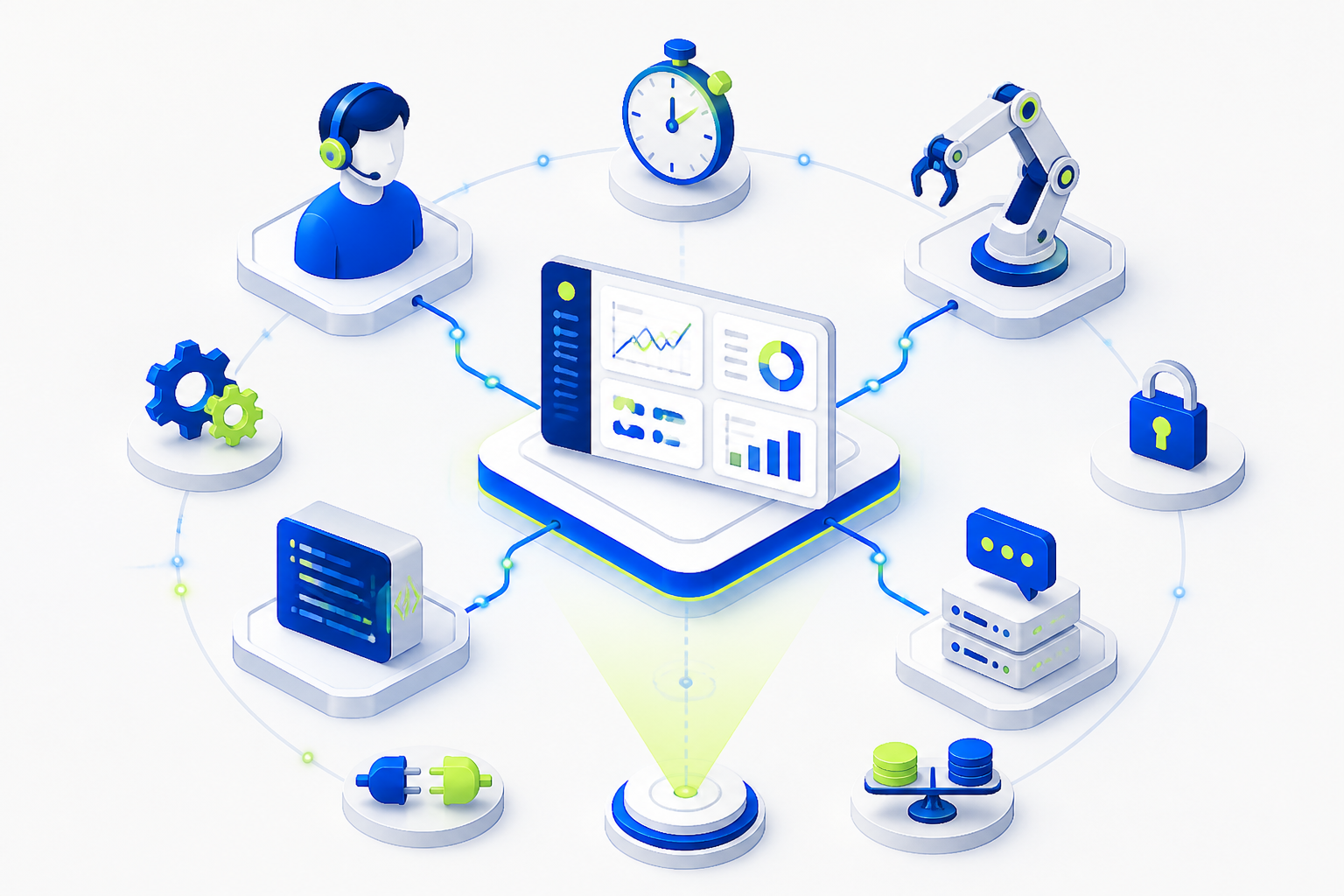
Personal AI Business Assistant: how to choose between Hermes, OpenClaw, a self‑written system and Softrestchat
AI Agents and 152‑FZ: how to ensure legitimate data processing and risk management
AI agent or chatbot: how to choose a business automation tool
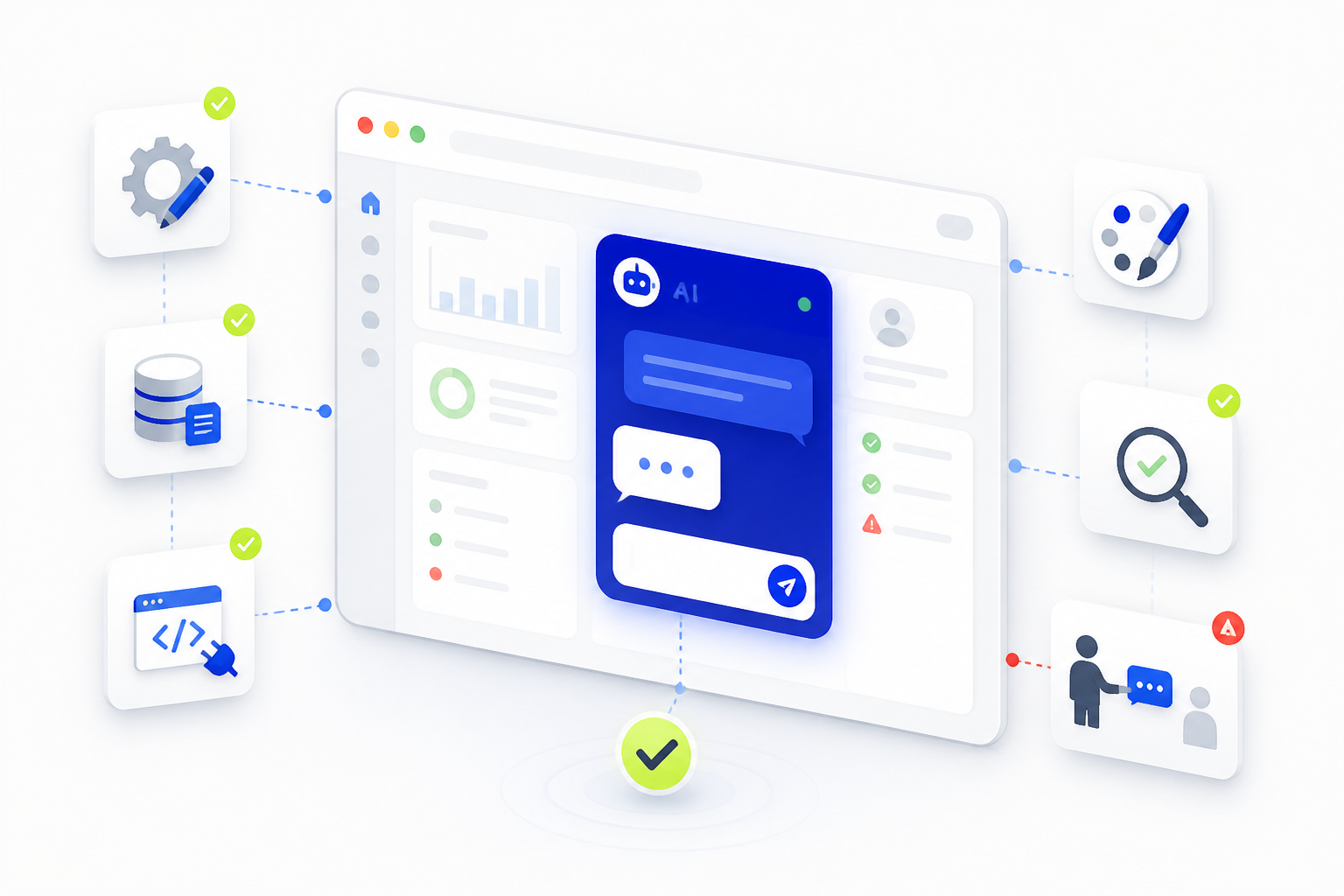
How to install an AI agent on a website in an hour: quick launch of a chat widget without errors