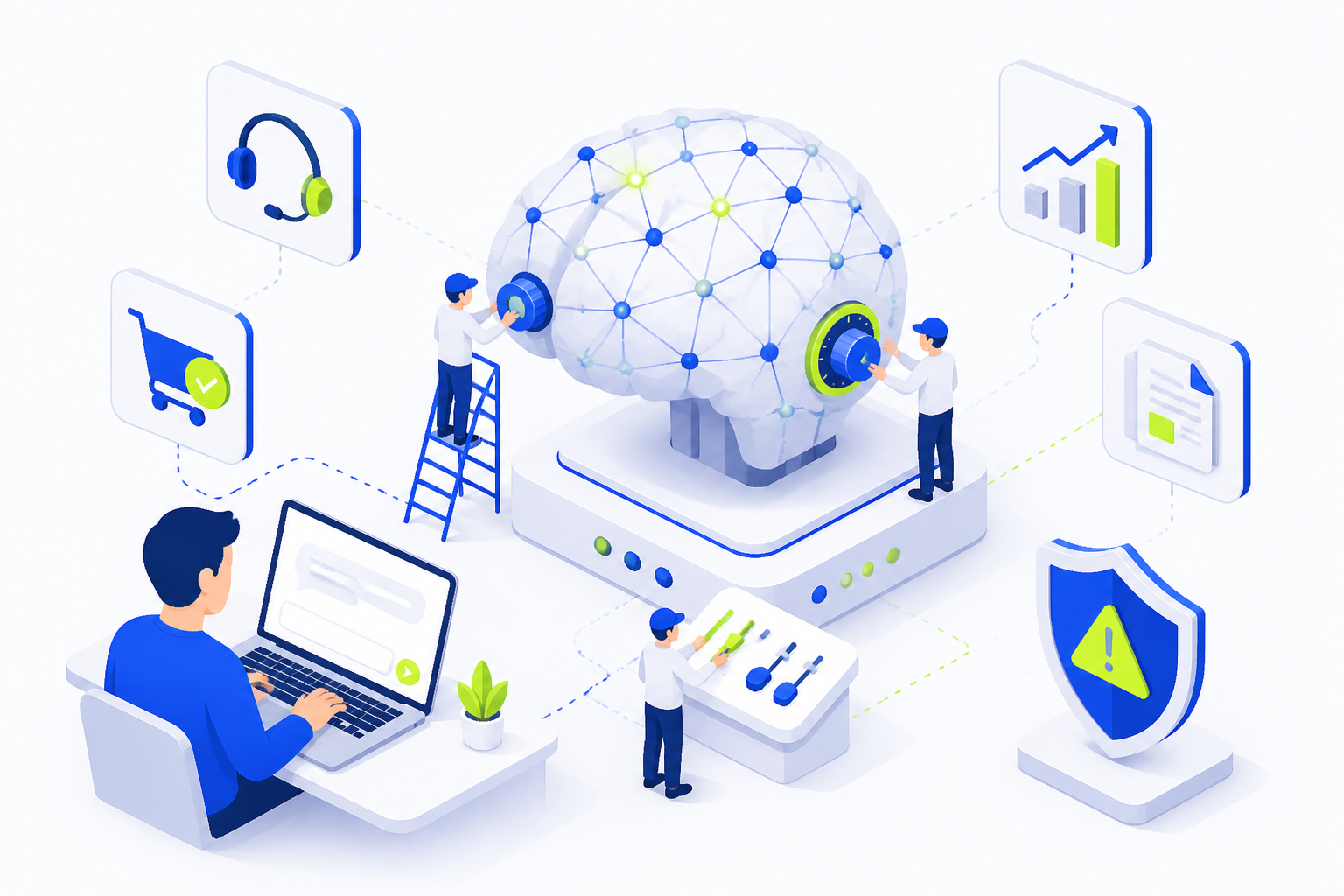
From Machine Optimization to Token Optimization: How AI Agents are Changing Development


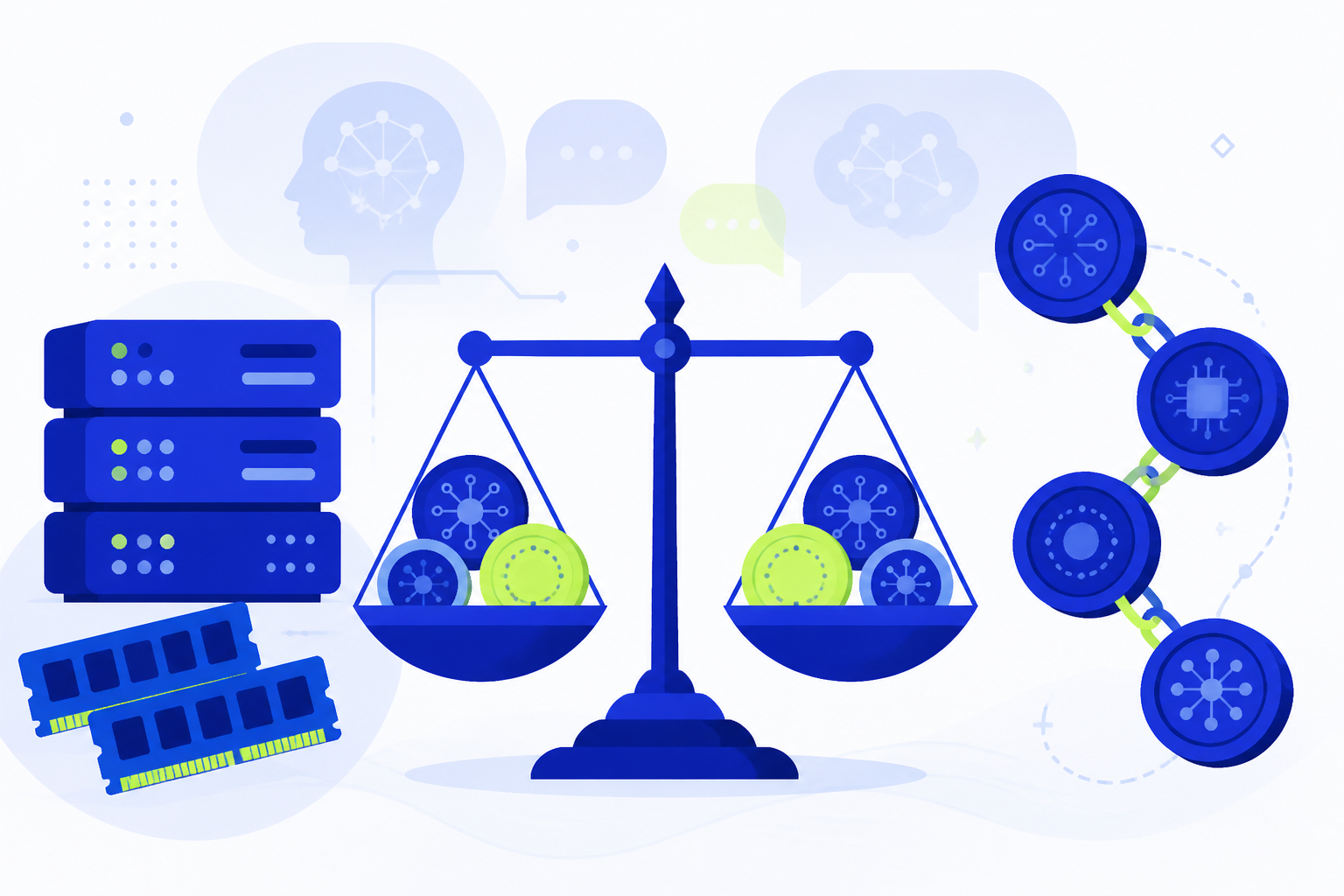
The world of development is undergoing a quiet but very profound shift. For a long time, engineers have been thinking primarily about how to save computing power: memory, processor time, disk space, network sharing. This influenced the architecture of programs, the choice of languages, data storage methods, and even the developer's thinking style. Today, a new limitation has been added: the cost and volume of text context for artificial intelligence-based systems.
Previously, the bottleneck was often the machine that executes the program, but now the bottleneck is increasingly becoming the number of tokens — fragments of text that the language model receives as input and creates as output. This is especially noticeable in AI agent systems, where several independent program participants exchange messages, refine tasks, write code, check results, and make decisions. Such a system can be very useful, but without thoughtful savings it quickly turns into an expensive and noisy mechanism.
From saving memory to saving meaning
In classical development, optimization was often associated with physical resources. The engineer chose a more compact data structure, avoided unnecessary calculations, monitored the number of database accesses, and reduced network requests. A good program was considered not only correct, but also careful: it did not waste unnecessary time, memory and power.
With the advent of powerful cloud computing, some of these limitations have become less noticeable. Many teams are used to solving problems by scaling: adding servers, increasing memory, and transferring heavy operations to separate services. Of course, saving computing power has not disappeared, but for many applications it has ceased to be the main daily fear.
Systems based on large language models have given developers back a sense of limitation, only in a new form. Now you need to think not only about how many bytes an object occupies in memory, but also about how much verbal context the model will need to understand the task. The token has become a new unit of expenditure. It reflects not just the volume of the text, but the cost of transferring meaning to the machine.
Why tokens have become a new development resource
A token is a small piece of text that the language model works with. It can be a word, a part of a word, a punctuation mark, or another piece of text. When the user sends a request, the model reads it as a set of such fragments. When she responds, the response also consists of tokens.
Tokens have several important features. Firstly, they cost money because text processing requires calculations. Secondly, the model has a limitation on the size of the context: it cannot simultaneously take into account infinitely much information. Thirdly, an excess of text worsens the quality of solutions: the model may get lost in the details, start taking into account outdated information, or pay attention to minor details.
Therefore, saving tokens is not just a matter of budget. It's a matter of manageability. The more accurately the system transmits the necessary information, the more likely it is that artificial intelligence will perform the task correctly. A new discipline is emerging in development: designing a concise, sufficient, and verifiable context.
AI agents as a new type of software system
An AI agent is a program participantwriting code
At first glance, this scheme looks almost like a team of specialists. But it has a special feature: each exchange of messages consumes tokens. If agents tell each other everything in a row, repeat the original task in full, apply long execution logs and do not clear the context, the system becomes expensive and slow.
How architecture has changed: context has become part of design
In traditional architecture, much attention has been paid to data flows: where data comes from, where it is stored, who has access to it, and how it is transformed. In systems with artificial intelligence, another flow appears — the flow of context. This is not just data, but selected information that the model needs to see right now to make a decision.
The context cannot be considered an endless basket where everything useful is stacked. It needs to be designed as carefully as a database or software interface is designed. If an agent needs to check the code, they don't always need the entire discussion history. Sometimes requirements, a modified fragment, and a list of restrictions are enough. If the agent needs to prepare a response to the user, he does not need to see the internal reasoning of all previous participants, but needs the outcome and the basis of the decision.
New optimization: less noise, more signal
Previously, optimization often meant "perform fewer operations". Now, more and more often, it means "convey less unnecessary text." This changes the approach to development. The engineer begins to think about the density of meaning: how much each sentence helps the model to do the job.
For example, a bad request to an agent may contain a long project history, many outdated requirements, old solutions, and emotional comments. Formally, there is a lot of information, but there is little useful signal. A good query contains a goal, current constraints, input data, expected type of result, and validation criteria.
Saving tokens should not turn into excessive brevity. If you remove important conditions, the model will start thinking things through. Therefore, the task of the developer is not just to shorten the text, but to highlight the main thing. In this sense, modern optimization is getting closer to editing, problem setting, and knowledge management.
Token Saving Practices in AI Agent Systems
The first practice is role separation. The agent should receive only the information that corresponds to its purpose. The examiner does not always need the full design of the product, and the compiler of the summary report does not need the entire original action log.
The second practice is brief interim results. After a big stage, the system may not save the entire conversation, but a concise summary.: what has been decided, what restrictions are in effect, and what questions remain open. Such a resume becomes a new working status.
selective knowledge extraction
The fourth practice is strict exchange formats. If the agent returns the result in a predefined structure, it is easier to verify its response and pass it on to the next participant. Unnecessary reasoning, repetition, and embellishments are reduced.
The fifth practice is caching, that is, the reuse of already obtained results. Once the system has calculated a short description of a module or checked a typical error, it is not always necessary to refer to the model again. You can save the total and use it for similar tasks.
The price of a mistake: Why extra context can be harmful
Intuitively, it seems that the more information the model receives, the better. In practice, this is not always the case. An unnecessary context can worsen the response, because the model begins to take into account minor details or mixes new requirements with old ones.
In agent-based systems, this problem increases. One agent added a long explanation, the second retold it with distortions, and the third included both texts in the new request. After a few steps, the system already carries a lot of repetitions, inaccuracies, and outdated conclusions. Such a context is not only expensive, but also dangerous.
Therefore, it is important to introduce cleaning rules. The system must understand which information is outdated, which decisions have been canceled, which data is the source of truth, and which is a temporary note. Context management becomes part of the quality of a software product.
Developer of the future: architect of constraints and semantic flows
A good specialist will differ not by simply "connecting the model", but by making the system predictable. He understands where the model is useful, where the usual program logic is needed, where verification is required, and where it is better not to spend tokens at all.
It resembles the mature stage of any technology. First there is admiration for the possibilities, then there is mass experimentation, and then comes the engineering discipline. In the case of AI agents, context economics becomes such a discipline.
What will remain of the old school optimization
The new focus on tokens does not negate the old principles. Computing power is still important. Fast algorithms, clean architecture, reliable storage and competent network work do not disappear anywhere. Moreover, artificial intelligence systems often require even more rigorous engineering because mistakes can become more expensive.
However, the focus is changing. Previously, a developer could optimize a program without thinking much about the language of the task description. Now the language becomes part of the execution. How the request is formulated, what data is included in the context, and how the agent describes the result directly affects the cost, speed, and quality of the system.
We can say that the old school taught saving operations, and the new school teaches saving uncertainty. The more accurately the system conveys meaning, the less it needs unnecessary attempts, clarifications and rework.
How do teams prepare for the new reality
Development teams should start with a simple one: measure the consumption of tokens and link it to the result. If accessing a model is expensive but does not improve the quality, it needs to be reviewed. If the agent creates long responses that no one uses, the format should be shortened.
It is useful to introduce rules for writing system instructions, query templates, summary requirements, and response quality checks. It is also important to store knowledge not in endless correspondence, but in managed sources: documentation, a database of solutions, architecture descriptions, and sets of examples.
Special attention should be paid to security. The more context the model gets, the higher the risk of passing on unnecessary information. Saving tokens here coincides with the principle of minimal access: the agent should see only what is necessary to complete the task.
Conclusion: tokens have become a new engineering currency
Development has gone from fighting for every byte of memory to designing complex distributed systems. Now a new stage has been added to this path: system design, where the semantic context becomes the most important resource. Tokens are not just a technical unit of calculation. This is a new engineering currency that expresses the cost of understanding, the price of interaction, and the quality of artificial intelligence management.
The future of IT development will be determined not only by those who know how to build fast programs, but also by those who know how to build economical chains of thought between humans, code, and AI agents. It's not the most verbose systems that will win, but those that can give the model exactly as much context as it needs for accurate action.
 Автор
Антон Амосов
Автор
Антон Амосов


Related articles
The cost of developing Telegram bots in Russia in 2025

GPT-6 Astra: a breakthrough to AGI or thoughtful marketing?

How AI improves labor productivity in Russia: cases, impact, and limitations
How to create an AI agent: clear architecture, tools, and typical errors

AI Agents and 152‑FZ: how to ensure legitimate data processing and risk management