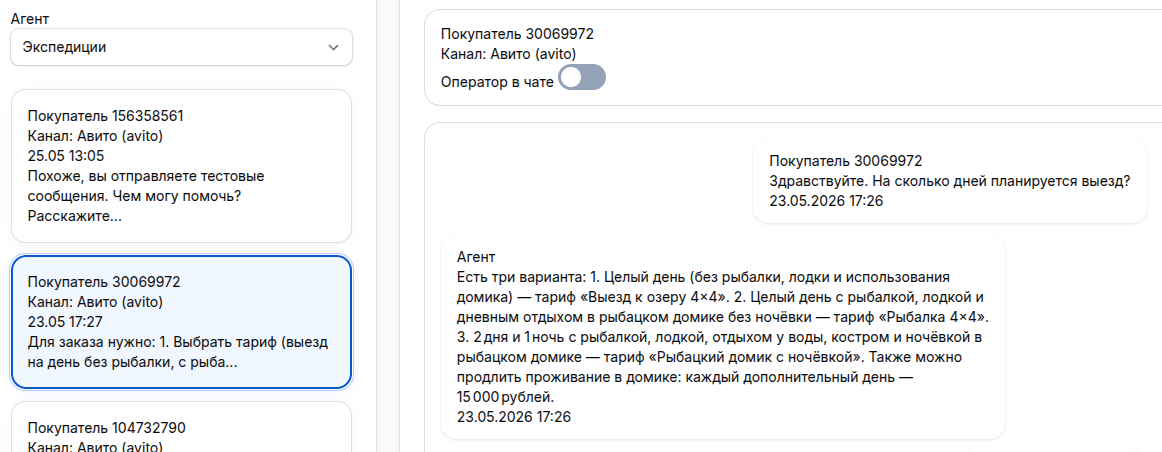
Personal AI Business Assistant: how to choose between Hermes, OpenClaw, a self‑written system and Softrestchat


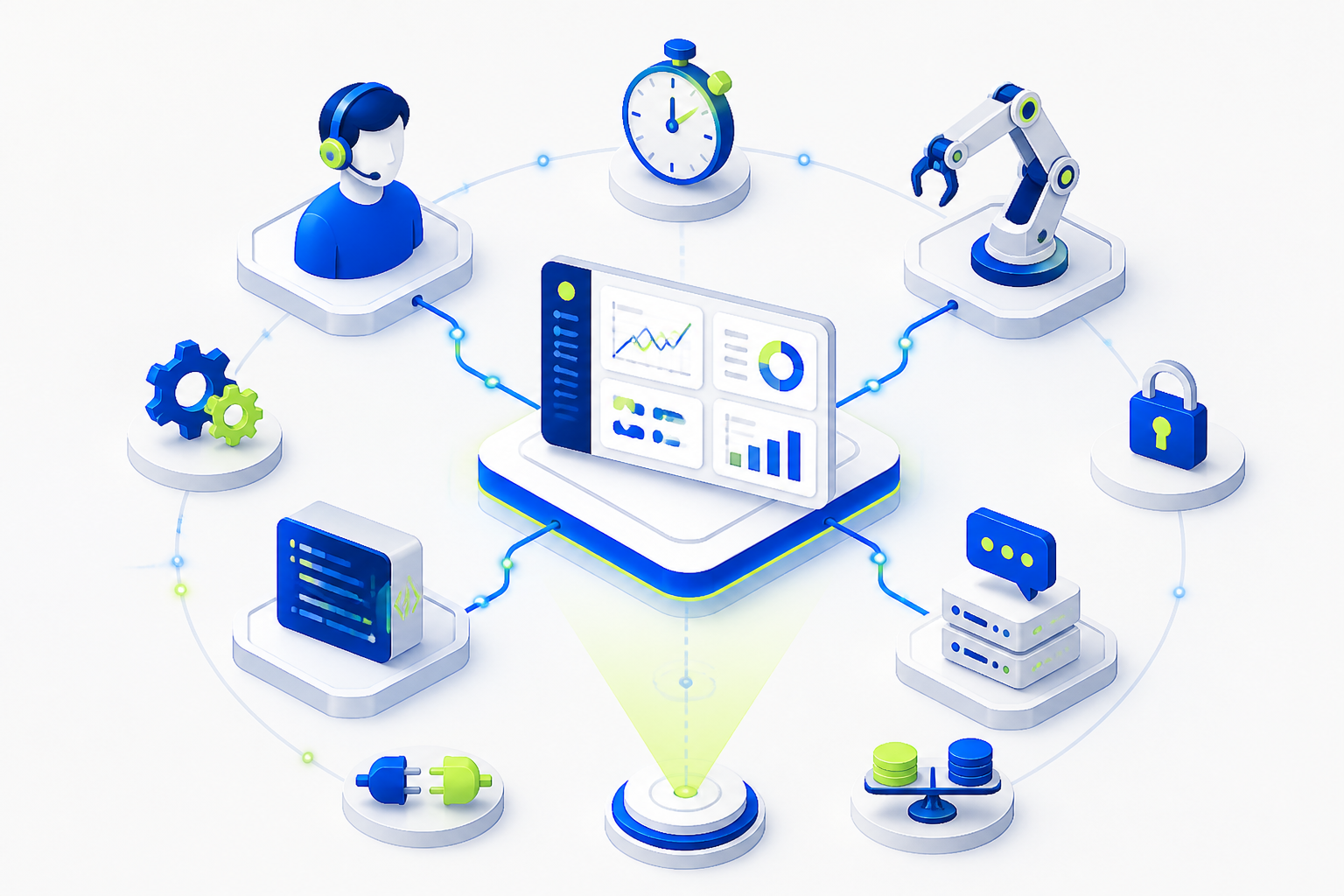
Why does a business need a personal AI business assistant
The personal AI business assistant is no longer an experiment, but a working tool for managers, sales, support and internal experts. It helps you find information faster, prepare responses, analyze documents, and launch actions in corporate systems. A good assistant does not just "chat", but works as a digital employee: he knows the regulations, takes into account the context of the company, accesses the knowledge base and performs applied tasks.
The main benefit is less time between question and action. The manager needs to clarify the terms of the contract, the support operator needs to find instructions, and the manager needs to get a brief summary of the report. If such operations are repeated daily, even saving 10-15 minutes quickly turns into a noticeable financial effect.
The AI assistant market is heterogeneous: there are ready-made services, open development frameworks, self-written solutions, and platforms for communicating with messengers and internal systems. In the article, we will compare four approaches: Hermes, OpenClaw, a self-written system and Softrest platforms. Let's evaluate them based on startup speed, flexibility, security, cost, and suitability for real-world workflows.
The key thought:managed AI agent
Comparison criteria: what is important to evaluate before implementation
It's not just the quality of the model's responses that should be compared. The AI assistant consists of several layers: a communication interface, a language model, a knowledge base, authorization, integrations, logging, administration, and the cost of computing. A weak point in any of these layers can make a convenient demo bot unsuitable for industrial use.
For a practical choice, it is enough to check five parameters:
- Launch speed
- Integrations
- Search with augmented generationthe knowledge basebased on company documents
- Safety
- Cost of ownership
According to these criteria, the differences between Hermes, OpenClaw, the self—written system and Softrest become clearer: some solutions benefit from simplicity, others from control, and others from the balance between a quick start and deep customization.
Hermes: when you need a ready-made AI assistant without long development
Hermes can be seen as an approach focused on quickly launching a personal AI assistant. Such solutions are usually chosen by teams that need to get a working tool without designing their own architecture, hiring developers, and setting up the infrastructure for a long time. This can be a convenient option for a manager or a small team: they registered, set up basic settings, connected sources or scripts, and started using an assistant in their work.
The strength of ready—made assistants is a low entry threshold. The user does not need to think about storing vectors, configuring queues, API keys, logging functions and fault tolerance. The interface is usually designed for a business user, not an engineer. This is useful when you need to quickly test a hypothesis: for example, whether an assistant can help managers with standard answers or collect short summaries of documents.
But there are natural limitations to the ready-made approach. The more a company wants to integrate AI into its unique processes, the more questions arise: is it possible to connect a non-standard CRM, set up its own authorization, restrict access by roles, use a specific LLM model, change the logic of knowledge base search or launch an external function. If the platform does not provide such capabilities, the business has to adapt processes to the tool, not the tool to the processes.
Hermes-like solutions are well suited for personal productivity, simple corporate scenarios, and first-time pilots. But if an assistant is to become part of the company's operational contour, it is important to check the depth of integrations, security policy and economics in advance with regular workload.
OpenClaw: the flexibility of an open approach and the price of independent support
OpenClaw, as a representative of an open or close to open approach, is interesting for companies that want more freedom in customization. Open solutions often involve technical teams: you can refine the code, change components, connect your own models, experiment with the agent architecture, and control data processing more deeply. This can be an advantage for a business with a strong IT team.
An open approach is especially useful when scenarios are non-standard. For example, an assistant must access internal microservices, perform complex chains of actions, work in a closed loop, or use specific security policies. With competent developers, an OpenClaw-like system can be adapted to the company's requirements better than a boxed service.
But flexibility is rarely free. Even if the solution itself is available without a high license, there are costs for deployment, DevOps, support, updates, monitoring, bug fixes, and security. In addition, open-source components require careful attention to versions, dependencies, and compatibility. For a small company, this may be more difficult than it seems at the pilot stage.
Another important point is the responsibility for the result. In a ready-made platform, part of the operational tasks is assumed by the service provider. In an open solution, a significant share of the responsibility passes to your team. If the assistant stops responding, the knowledge base is indexed incorrectly, or the function sends data to the wrong place, it is up to internal specialists to quickly find the cause and fix the problem.
Self-written system: maximum control, but high cost of ownership
A self-written system seems to be an ideal option for companies that need full control. You can design your own architecture, choose any LLM model, implement precise access logic, connect all internal services, and build an interface to fit your employees' habits. On paper, this is the most flexible way: no platform restrictions, no dependence on someone else's roadmap, complete customization.
In practice, a self-written assistant quickly turns into a full-fledged software product. We need an analyst, an architect, a backend developer, an integration specialist, a DevOps, a data engineer, a security specialist, and a person who will be responsible for the quality of responses. Even if the first version is created in a few weeks, industrial operation requires constant support: updating models, monitoring costs, improving manufacturing, error handling, and scaling the infrastructure.
Hidden tasks are especially expensive. For example, an assistant should not just respond, but link to sources, not invent facts, take into account access rights, keep a history of conversations, process attachments correctly, work with multiple channels, and have an administration panel. Each such feature requires design, testing, and maintenance. As a result, the pilot's budget may be moderate, and the cost of ownership per year may be significantly higher than expected.
A self-written system is justified when an AI assistant is the strategic core of a product or the company has strict requirements that cannot be covered by ready-made platforms. But if the goal is to quickly launch a business assistant for employees, sales, support, or workflow, in—house development often turns out to be too long and expensive a route.
Softrestchat: Multi-channel agent for messengers, RAG and business integrations
Softrestchat platforms occupy an intermediate position between a ready-made service and a complex self-written system. Their strong point is the ability to create an AI assistant that can be connected to familiar communication channels: the Max messenger or Telegram. This is an important factor for a business: employees and customers should not switch to a separate complex system if the work issue can be solved directly in the channel where communication is already underway.
multi-channel AI agent support
The platform also allows you to set up authorized sessions in channels. This means that the bot can be protected from unauthorized access: the assistant will not give out corporate information to a random user who found the bot in the messenger. For companies working with client data, internal documents, or commercial terms, such control is not a pleasant bonus, but a mandatory requirement.
Another advantage is the choice of LLM models. Alice, DeepSeek, OpenAI, and GLM-5.2 are available in Softrestchat, and they can be used without their own API key. If the company already has its own API key for the desired model, you can connect it and save platform credits. This provides flexibility in cost management: you can use the built-in model infrastructure or combine it with your own contracts.
Comparative table of solutions
To make the comparison less abstract, we will summarize the main differences in a single table. It helps you quickly see which approach is best suited to different management situations.: fast pilot, technical customization, strict control or daily use in messengers and CRM.
| Criteria | Hermes | OpenClaw | Self-written system | Softrestchat |
|---|---|---|---|---|
| Launch speed | High, if there are enough typical features | Average, depends on the IT team | Low or medium, requires development | High performance due to the ready-made platform and channel connections |
| Flexibility of configuration | Limited by the service's capabilities | High in the presence of developers | Maximum | High for business scenarios, RAG and features |
| Working with documents | Depends on the specific configuration | It can be implemented through the search and RAG components. | You can implement it completely for yourself | There is a connection to RAG with downloading of a large volume of documents |
| Integrations | Usually typical | Flexible, but requires customization | Any, but at the expense of development | Max, Telegram, API, Python, Bitrix, amoCRM and reports |
| Access security | Depends on the platform | It is configured independently | Designed from scratch | Authorized sessions in channels are supported |
| Cost of ownership | Predictable subscription, but subject to restrictions | Lower by license, higher by support | The highest at the industrial level | Subscription and loans, without the obligatory own infrastructure |
The table shows that there is no universal winner. Hermes is convenient for a quick start, OpenClaw is for technical teams, a self—written system is for unique requirements, and Softrest is for businesses that need an application agent in messengers, with RAG, functions, and integrations.
Security, authorization, and access control
The introduction of an AI assistant almost always raises the issue of security. As long as the assistant answers general questions, the risks are low. But as soon as he gets access to documents, CRM, reports, customer data, or internal regulations, security becomes a central theme. An error in setting up access can lead to the user seeing information that should not be relevant.
In a self-written system, security can be implemented very precisely, but it will have to be designed and maintained independently. You need to think about authorization, roles, action auditing, token storage, API protection, personal data processing, and rules for dealing with the history of correspondence. This is the right path for companies with high IT and information security maturity, but it requires resources.
In open solutions like OpenClaw, a lot depends on the quality of the implementation. The framework itself can provide good technical capabilities, but the final security is determined by how the team has configured the contour. If an integrator or an internal team misses an important detail, an open architecture will not save from operational errors.
The softrestchat in this comparison is interesting because it supports authorized sessions in channels. This is essential for a messenger bot: the bot can work in a familiar communication environment, but access to it remains controlled. In corporate use, this mechanism reduces the risk of unauthorized access to the knowledge base and internal functions.
Cost of implementation and operation
The price of an AI assistant is not only based on a subscription. The calculation should include the cost of LLM requests, document preparation, knowledge base configuration, integration, employee training, support, monitoring and improvements. Sometimes a solution with a low starting price turns out to be expensive to maintain, and a more expensive platform saves the team months of work.
The self-written system has the most complex economy. Even if we use available models and open-source components, development and support require human time. One specialist rarely closes the entire task stack. If you count team salaries, infrastructure, testing, and support, the real cost of ownership can quickly exceed the initial budget.
OpenClaw-a similar approach may be cheaper under licenses, but it requires technical expertise. It is beneficial to use it where developers are already on staff, and the AI assistant is part of a broader technology strategy. If each change needs to be ordered by an external contractor, the savings on the license can be lost in the cost of the work.
There are several tariffs provided in Softrestchat. An entry-level subscription costs 1,000 rubles per month, and 200 bonus credits are credited to the account to pay for the LLM. The tariff for 5,000 rubles includes 1,000 credits. Loans can be purchased separately at a price of 1 credit = 1 ruble. This is convenient for businesses because expenses can be planned: there is a subscription, there is a clear credit model, and if you have your own API key to LLM, you can use it and save internal credits of the platform.
This model is particularly suitable for step-by-step implementation. A company can start with a small scenario, assess the load, calculate the cost of loans, and then expand the number of functions and connected channels. This reduces the risk of a large upfront budget before the benefits of the assistant are proven in practice.
Practical usage scenarios in the company
For a manager, a personal AI business assistant is useful as a quick analytics tool. They can prepare a brief summary of the document, compile a report, send the result to Max, access the API of an external system, or help formulate an assignment. In such scenarios, the ability to run functions is especially valuable, because a simple text response does not always complete the task.
How to choose the appropriate option
The choice of a solution should start not with the name of the platform, but with the task map. It is necessary to understand who will use the assistant, what data he needs, what actions he should perform and in which channels he should be available. If only one supervisor needs an assistant for personal productivity, the requirements are the same. If he has to serve the sales department, support, and internal knowledge base, the requirements are completely different.
Hermes makes sense to consider when simplicity, quick start, and no complicated integration requirements are important. OpenClaw is suitable for technical teams who want more control and are ready to support the solution on their own. A self-written system is justified if the assistant is a critical part of the product or a unique architecture is required. Softrestchat looks like a strong option for companies that need a ready-made but customizable multi-channel agent with connectivity to messengers, RAG, features, and CRM.
It is also important to appoint an assistant owner in advance. An AI agent should not be an unattended bot. He should have those responsible for the knowledge base, scripts, integrations, and quality of responses. Then the solution will evolve with the business, rather than remaining a beautiful experiment that no one supports.
Bottom line: which AI assistant is better for business
If we compare Hermes, OpenClaw, a self-written system and a softrest from a business point of view, the choice depends on the maturity of the company and the depth of tasks. Ready—made assistants provide speed, open solutions provide flexibility, self—written development provides full control, and platforms like Softrestchat offer a balance between fast startup and applied business integrations.
For most companies that do not need a laboratory prototype, but a working AI agent in messengers and corporate processes, four things are especially important: connection to the knowledge base, secure access, performance of functions and an understandable economy. Softrestchat closes these areas through RAG, authorized sessions, connection to Max and Telegram, functions with Python and API, integrations with Bitrix and amoCRM, as well as a flexible choice of LLM models.
A self-written system remains an option for those who are willing to invest in their own development and maintenance. OpenClaw is interesting for technical teams who need the freedom to experiment. Hermes can be convenient for quick start and personal scenarios. But if the goal is to create a personal AI business assistant who works in real channels, uses company documents and knows how to perform actions, Softrestchat's platform approach looks the most practical and balanced.
The main thing is not to evaluate the AI assistant only by the beautiful response in the chat. The real value is shown when an assistant saves time, reduces the burden on employees, protects data and helps a business move faster from a question to a result.
 Автор
Антон Амосов
Автор
Антон Амосов


Related articles
Top 10 platforms for building AI agents: what's inside each service
A chatbot in simple words: what is it and what is it for?
How to create an AI agent: clear architecture, tools, and typical errors
AI Agent Constructor: what is really possible to assemble without a programmer and where is the code needed?
Terms of reference for an AI agent: template, structure and examples of formulations