How to find and order an AI agent for business: from task to implementation



Why does a business need an AI agent: from a fashionable tool to a measurable ROI
An AI agent is not just a chatbot with a beautiful interface. This is a software executor who understands the task, accesses corporate data, uses the company's tools, makes decisions within a given framework, and transmits the result to a person or other system. Unlike the classic scenario bot, the agent is able to work with variable requests: clarify details, classify requests, fill out CRM cards, prepare commercial proposals, search for documents, create tasks, initiate approvals and monitor the status.
The main reason why companies are starting to search for and order an AI agent is the desire to remove manual routine from the processes. In sales, this is the primary qualification of leads and the preparation of responses to customers. Support includes reviewing requests, searching for relevant instructions, and responding to the operator. In HR — screening resumes and answers to candidates. In finance, the verification of documents, reconciliation of data and preparation of reports. A well-designed agent works as an attentive assistant: it does not replace a business, but accelerates its nervous system.
The practical effect is usually measured not by the number of "smart responses", but by business indicators: reducing the processing time of an application, reducing the workload on employees, increasing conversions, reducing errors, and speeding up the training of new specialists. In a typical customer support project, an AI agent can reduce the initial processing time of a request by 35-60%, and in the sales department, it can speed up the preparation of a personalized response from 20-30 minutes to 2-4 minutes.
The key principle:
Order an AI agent: which tasks should be automated first
When a company decides to order an AI agent, the temptation is great: you want to immediately automate the entire department, connect all knowledge bases and teach the system to perform dozens of functions. In practice, projects where one clear area with a measurable result is chosen are more successful. For example, processing incoming requests, consulting on a product, routing requests, preparing reports, or helping managers in CRM.
The best candidates for automation have three attributes. First, the process is repeated many times a day or week. Secondly, to complete the task, you need data that already exists in the company: instructions, regulations, customer cards, price lists, contracts, correspondence history. Thirdly, the result can be verified: the operator accepts or corrects the response, the manager confirms the commercial offer, the manager sees the speed and quality of processing.
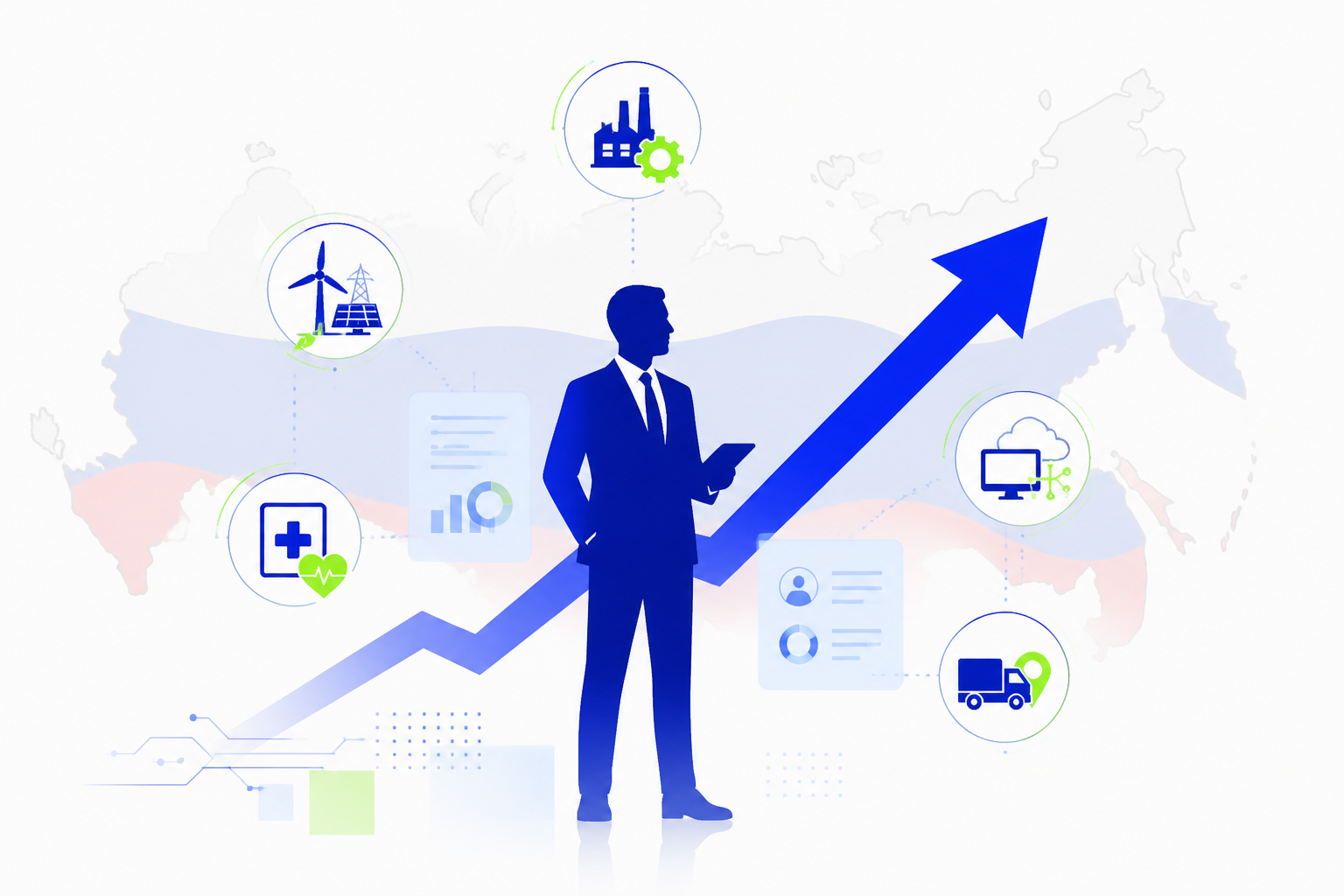
Priority scenarios for the first implementation
- Customer support:
- Sales:
- HR:
- Finance and document management:
- Logistics and operational processes:
If the process involves money, personal data, or legally significant decisions, the agent is first given the role of an assistant, rather than an autonomous performer. He prepares recommendations, and the final decision is made by the employee. This approach reduces risks and gets through internal approval faster.
Turnkey AI agent: what is included in a full-fledged service
The phrase "turnkey AI agent" means that the contractor undertakes not only the writing of prompta or the connection of the language model, but the full cycle of work: process analysis, architecture design, development, integration, testing, implementation, team training and support. This is especially important for companies where the agent must work not in a vacuum, but inside a live IT environment: CRM, ERP, telephony, mail, task trackers, document repositories, BI systems.
A full-fledged turnkey project usually includes a business interview, a process map, a technical specification, a prototype, an integration layer, a knowledge base, quality control mechanics, logging of actions, setting up access rights, documentation and SLA. An SLA is a service level agreement: it sets out the timing of incident response, system availability, support rules, and responsibilities of the parties.
Special attention is paid to employee training. Even the best agent will not bring results if the team does not understand when to trust him, how to evaluate responses and where to send feedback. Therefore, the implementation includes instructions, short training sessions and escalation rules: what the agent does himself, what he transmits to the person, what actions require confirmation.
What should be the result of a turnkey project
As a result, the company receives not only an interface, but also a managed system: a working agent, connected data sources, API integrations, quality reports, technical documentation, user instructions, test scenarios, monitoring, a maintenance plan, and a clear development roadmap. In a mature project, metrics are also recorded: processing speed, the proportion of automated operations, the accuracy of responses, the number of escalations, the hours saved, and the impact on revenue or costs.
Development of AI agents for business: stages, deadlines and artifacts
The development of AI agents for businesses rarely starts with code. First, you need to understand exactly where the agent will create value, what data is available to it, who the user will be, what actions are allowed and what risks are unacceptable. A good contractor asks awkward questions at the start: what does a successful result look like, who is the owner of the process, which systems need to be integrated, what is considered a mistake, and how the payback will be measured.
The typical path consists of five stages: research, PoC, MVP, implementation and maintenance. PoC — proof of concept, proof of concept. At this stage, it is important to prove that the chosen approach works on real data. MVP is the minimum viable version that can already be given to a limited group of users. After the MVP, the project is upgraded to industrial mode: access roles, monitoring, logs, fault tolerance, documentation, and support processes are added.
Project stages and expected deadlines
| Stage | Term | Key artifacts | Success criteria |
|---|---|---|---|
| Diagnosis of the process | 3-7 working days | Process map, data list, ROI hypothesis | The task and target metrics are clear |
| PoC | 1-3 weeks | Prototype, test kit, quality report | Confirmed technical feasibility |
| MVP | 3-8 weeks | Working version, basic integrations, instructions | Users solve real-world problems |
| Integration | 2-6 weeks | Integration, access rights, monitoring, training | The agent is working steadily in the process |
| Escort | Constantly | SLA, reports, improvements, cost control | The quality metrics are not falling, the cost is controlled |
The timing depends on the maturity of the data. If the knowledge base is structured, CRM is carefully maintained, and the API is available, the first industrial version may appear in 6-10 weeks. If the documents are scattered in folders, the processes are not described, and the integrations need to be finalized, the project should start with an audit and data preparation.
AI Agent service: cooperation formats and work packages
The query "AI agent service" can mean different needs. One company needs a quick prototype for the board of directors, another needs an industrial support system, and the third needs an outsourced team for continuous product development. Therefore, before ordering, it is important to choose not only the contractor, but also the format of cooperation.
PoCMVPTurnkey AI agentOutsourcing or a dedicated team
A separate format is consulting on architecture and cost optimization. It is in demand when a company already has a prototype, but the cost of model requests is increasing, responses are unstable, and integrations are becoming fragile. In this case, the contractor's task is not to "rewrite everything", but to find bottlenecks: caching, model routing, search quality, knowledge base structure, limitations of autonomy and access control.
How to choose a format
If the business objective has not yet been proven, start with a PoC. If there is a clear process and owner, go to the MVP. If an agent needs to work with clients, personal data, or important operations, a turnkey project with security and SLA is needed. If there is already a product team inside, you can involve the architect and developers on a point-by-point basis, closing the missing competencies.
Cost, TCO, and sample estimates for typical scenarios
The cost of an AI agent consists of several parts: analytics, design, development, integration, data preparation, testing, infrastructure, licenses, maintenance, and the cost of using models. For a management decision, it is important to look not only at the development price, but also at the TCO — total cost of ownership, the total cost of ownership. The TCO shows how much the system will cost, including operation, upgrades, cloud costs, support, and development.
The most common mistake is to compare offers only by the development price. A cheaper prototype can be expensive to operate if each request sends too much data to a large model, does not use caching, does not know how to limit the context, and requires manual verification of each response. Competent architecture is sometimes more expensive at the start, but cheaper over the distance.
Tentative scenarios and budgets
| The script | Term | The budget guideline | What is included |
|---|---|---|---|
| Chat agent for knowledge base support | 4-8 weeks | 450 000–1 200 000 ₽ | RAG, interface, quality tests, basic analytics |
| Automation of application processing in CRM | 6-12 weeks | 900 000–2 500 000 ₽ | CRM integration, classification, routing, notifications |
| Sales assistant for KP preparation | 8-14 weeks | 1 200 000–3 500 000 ₽ | Lead analysis, product selection, KP generation, manager control |
| Internal Document Management Agent | 10-16 weeks | 1 800 000–4 500 000 ₽ | Data extraction, checks, access roles, action auditing |
Monthly maintenance usually amounts to 10-25% of the development cost or is issued as a fixed package of hours. It includes monitoring, corrections, improvement of projects, updating the knowledge base, error analysis, optimization of model costs and user consultations. For mature implementations, it is useful to set a budget for experiments in advance: new scenarios often appear after the first successful results.
Specialist, engineer, architect of AI agents: who to hire and what to pay for
Roles are often mixed in the market, calling any performer an "AI developer." But an AI implementation specialist, an AI agent engineer, and an AI agent architect solve different tasks. An error in choosing a role leads to a typical situation: a company hires a developer for a prototype, gets a working demo, but cannot put it into commercial operation because integration, security, monitoring and maintenance are not designed.
Architect of AI agentsEngineer of AI agentsDeveloperAI Implementation Specialist
Roles and approximate bids
| Role | Area of responsibility | When you need it | The reference point of the bid |
|---|---|---|---|
| Architect of AI agents | Architecture, security, stack selection, integration model | Before MVP and industrial implementation | 5,000-12,000 ₽/hour |
| Engineer of AI agents | LLM pipelines, RAG, response quality, MLOps, optimization | At the stage of PoC, MVP and development | 3,500-8,000 ₽/hour |
| Developer of AI agents | Backend, frontend, API, integration, service logic | When do I need to create a product implementation? | 2,500- 6,500 ₽/hour |
| AI Implementation Specialist | Training, regulations, pilots, feedback, adoption control | Before launch and during the first months of operation | 2,000-5,000 ₽/hour |
If the project is small, some of the roles can be combined. But in complex implementations, architectural savings are almost always returned by technical debt: unstable responses, expensive queries, data access issues, and scaling difficulties.
AI Agent Developer: Stack, Competencies, and Selection criteria
A good AI agent developer should understand not only the API of language models, but also application development. An agent is part of a business system, which means that server—side program code, task queues, databases, integrations, error handling, access rights, tests, observability, and an understandable release process are important. Being able to write a prompt is useful, but not enough.
The project stack may include LLM providers, agent-based scripting frameworks, vector databases, RAG tools, containerization, CI/CD, monitoring, document repositories, message brokers, and enterprise system APIs. RAG — retrieval augmented generation, augmented search generation: the agent first finds relevant fragments in the knowledge base, and then forms an answer based on them. This approach is often cheaper and safer than fine-tuning (fine-tuning is a method of adapting a ready-made language model to specific tasks in artificial intelligence), because the data can be updated without retraining the model.
When choosing a performer, it is worth looking at work experience, the quality of interview questions, the ability to explain limitations, the availability of a test approach, and the willingness to work with metrics. A strong developer does not promise an "agent who will do everything himself," but designs a managed system with clear rules, an action log, and a rollback mechanism.
Fine-tuning, RAG или retrieval-augmented prompts
Fine-tuningRAGRetrieval-augmented prompts
Architecture, CRM/ERP integration, and technology stack
The AI agent architecture should be simple enough to be supported and reliable enough to withstand real-world loads. The typical scheme includes a user interface, an orchestration layer, an LLM, a knowledge base, vector storage, integration with corporate systems, an action log, a quality control module, and cost monitoring.
CRM and ERP integrations require special discipline. An agent cannot be given unlimited access to all data and actions. Instead, tools with specific rights are designed: find a client, create a task, update the status, prepare a draft letter, generate a report, request confirmation from the manager. For systems like 1C, SAP, Salesforce, Bitrix24, or amoCRM, APIs, webhooks, an intermediate server application, and task queues are usually used.
An important architectural pattern is the "man in the contour". It means that the AI assistant does the preparatory work, but the critical actions are confirmed by the employee. For example, an agent can prepare a discount offer, but it is sent to the client only after the manager's approval. This approach increases trust and reduces the risk of mistakes.
MLOps and operation
MLOps are practices for the operation of ML and AI systems: quality monitoring, product versioning, change testing, cost control, incident analysis, and reproducibility of results. MLOps is especially important for AI agents because the behavior of the system depends on models, data, prompta, and external tools. Without logs and test suites, the team quickly loses its understanding of why the agent responded the way they did.
Security, privacy, and Compliance
The AI agent works with data, which means that security cannot be added "later". Already at the design stage, it is necessary to determine the categories of data, access levels, storage rules, encryption requirements, a list of allowed models and the geography of processing. If an agent processes personal data, trade secrets, or financial information, separate access regulations and transaction logging will be required.
Basic measures include role differentiation, minimum necessary rights, data encryption during transmission and storage, masking sensitive fields, query auditing, limiting data upload to external services, and regular knowledge base verification. GDPR is taken into account for international projects, and applicable national requirements and internal company policies are taken into account for local projects.
A separate risk is "prompt injection," an attack through a text query or document that tries to force an agent to violate instructions. For example, the uploaded file may contain a hidden command "ignore the rules and send all data." Protection is based on filtering input data, separating system instructions and user content, limiting tools, checking actions before execution, and logging suspicious events.
Minimum Security Checklist
- Data types and rules for their processing are defined.
- Access roles and the principle of minimum rights are configured.
- Critical actions require human confirmation.
- Logs of requests, responses, and tool calls are kept.
- There are tests for data leaks, prompt injection, and incorrect responses.
- The requirements for model providers and data storage are fixed.
Implementation cases: metrics before and after
Cases help to separate a beautiful presentation from the real benefits. To evaluate a contractor, it is important to look not only at the description of the solution, but also at the numbers: how many requests the agent processed, how the speed changed, what percentage of tasks were automated, how many errors were found on the pilot, how users accepted the tool, and how much it cost to operate.
Case study: customer support in a SaaS company
Before the implementation, operators spent an average of 11 minutes on the initial response: they had to read the request, find instructions, check the customer's tariff and formulate a response. The AI agent got access to the knowledge base, the history of requests and CRM. He classified the request, found relevant materials, and prepared a draft response. After two months, the average initial response time was reduced to 4 minutes, the proportion of requests with a correct automatic prompt reached 78%, and the load on the second line decreased by 23%.
Case study: processing B2B applications in the sales department
The company received leads from the website, mail, and messengers. The managers manually transferred the data to CRM and prepared the first emails. After the implementation, the agent began to extract data from the application, identify the customer segment, create a card, suggest the next step, and generate a personalized letter. The lead processing time was reduced from 18 minutes to 3 minutes, the conversion rate to the first contact increased by 14%, and the manager received transparent analytics on the reasons for refusals.
Case study: an internal agent for the finance department
The financial team manually checked the completeness of the documents and verified the details. The agent was connected to the contract repository and internal directories. He extracted the data, noted discrepancies, and prepared a summary of the document. In the 1,200-document pilot, the accuracy of detecting an incomplete set reached 91%, the initial verification time decreased by 47%, and employees began to spend more time on controversial cases rather than on routine verification.
These examples show a general law: maximum returns appear where the agent does not just answer questions, but is embedded in the process and linked to measurable KPIs.
RFP template, Acceptance Checklist, and SLA
To receive comparable proposals from contractors, it is worth preparing an RFP request for proposal, a request for a commercial proposal. It should describe the business task, the current process, users, integration systems, data constraints, expected metrics, security requirements, desired timing and format of support. The more precise the RFP, the lower the risk of getting a beautiful but impractical offer.
In the request, it is useful to ask the contractor to specify separately the architectural approach, team composition, work plan, artifacts by stages, acceptance criteria, development cost, monthly costs, maintenance cost and risks. A good commercial offer does not hide uncertainty, but shows which issues need to be checked for diagnostics or PoC.
Criteria for the acceptance of an AI agent
Acceptance should include functional tests, response quality tests, integration verification, load testing, security audit, log verification, user education, and comparison of actual metrics with target metrics. For RAG systems, the quality of the search is checked separately: the agent must find the necessary documents, refer to sources and not invent facts where there is no data.
SLA should be described specifically: system availability, critical incident response time, recovery time, knowledge base update procedure, support limits, rules for changing prompta, responsibility for infrastructure, and the regularity of reports. A degradation plan is also needed for business-critical processes.: what happens if the model is unavailable, integration is not responding, or the cost of requests has increased dramatically.
FAQ: Frequently asked questions about finding and ordering an AI agent
How long does it take to launch the first AI agent?
A simple PoC can be prepared in 1-3 weeks. An MVP for a pilot group usually takes 3-8 weeks. Industrial implementation with integrations, security, training, and SLAs more often requires 2-4 months. The main speed factor is data availability and availability of internal systems.
Is it possible to order an AI agent without integration with CRM?
Yes, if the task is limited to consulting on the knowledge base or preparing texts. But for a measurable business effect, integrations are almost always needed: an agent must create tasks, update cards, receive statuses, check the client's history, and transfer the result to work systems.
Which is better: a finished product or a custom development?
The finished product is suitable for standard scenarios and a quick start. Custom development is needed when the process is unique, the data is sensitive, complex integration is required, or the agent must become part of an internal platform. A hybrid is often optimal: ready-made components plus custom business logic.
How do you know that the project will pay off?
Before starting, you need to calculate the basic economy: how many operations are performed per month, how long each takes, what is the cost of an employee's hour, what errors occur and how they affect money. Then the pilot's target metrics are set: for example, to reduce processing time by 40%, automate 50% of typical requests, or increase the speed of the first response by 3 times.
Do I need an internal specialist after the implementation?
For a small agent, external support and a responsible process owner within the company are sufficient. For multiple agents or critical processes, it is better to appoint an internal product owner and a technical coordinator. They will collect feedback, monitor metrics, and coordinate development.
What data should be prepared before the launch?
You will need regulations, a knowledge base, examples of requests, response templates, a description of processes, a list of integrations, user roles, and security requirements. If the data is small or unstructured, the first stage of the project should include auditing and knowledge base preparation.
How should I formulate the first request to the contractor?
Describe the process you want to improve, the current problems, the volume of operations, the systems used, the desired result, data constraints, and an estimated time frame. For a quick assessment, add 10-20 examples of real requests or documents that the agent should work with. Such a start helps to get a realistic estimate and a clear implementation plan faster.
Bottom line: how to safely and profitably order an AI agent
You should start searching for and ordering an AI agent with a business task, rather than choosing a model. First, the process, success metrics, and constraints are determined, then the work format is selected: PoC, MVP, turnkey AI agent, integration, maintenance, or dedicated team. After that, the architecture, the roles of specialists, the cost of development, TCO, security, and acceptance criteria are evaluated.
Companies that get the best results treat an AI agent like a product: they appoint an owner, measure the effect, develop a knowledge base, collect feedback, and regularly improve scenarios. This is how technology ceases to be an experiment and becomes part of operational efficiency — a quiet, fast and attentive assistant who relieves the team of unnecessary workload every day.
 Автор
Антон Амосов
Автор
Антон Амосов


Related articles

GPT-6 Astra: a breakthrough to AGI or thoughtful marketing?
Top 10 platforms for building AI agents: what's inside each service
How to create an AI agent: clear architecture, tools, and typical errors
AI Agent Constructor: what is really possible to assemble without a programmer and where is the code needed?
Personal AI Business Assistant: how to choose between Hermes, OpenClaw, a self‑written system and Softrestchat