Fine-tuning LLM: how to turn a model into a business partner



What is LLM fine tuning?
Fine-tuning LLM
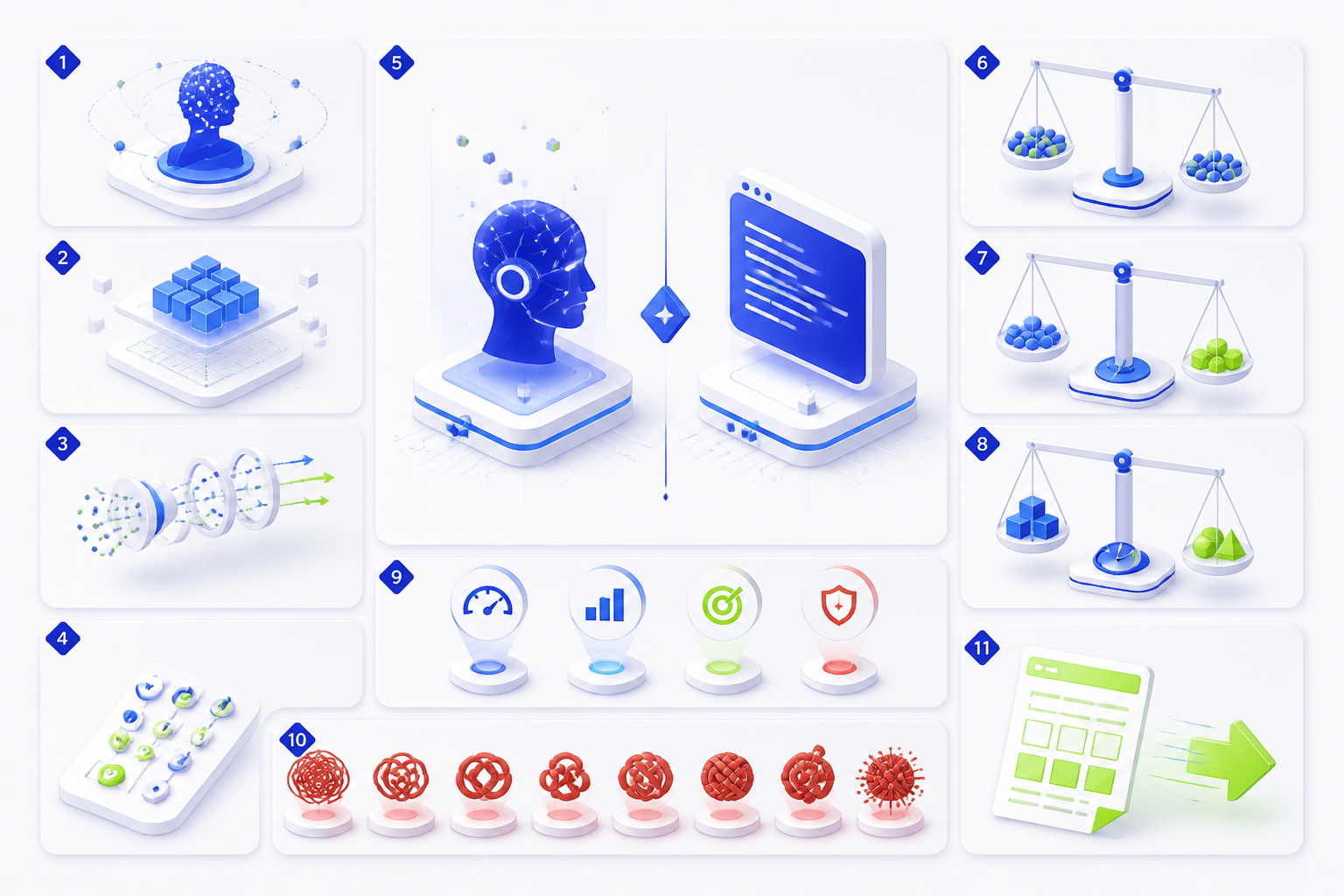
It is important to understand that fine-tuning does not "teach the model everything all over again." It corrects the behavior of an already trained model based on a specially prepared set of examples. This makes responses more stable, closer to the desired format, and less dependent on long instructions in each request.
Why does a business need it?
repeatable quality
For example, if a company processes 5,000 requests per month, even a 20-30% reduction in response time can result in significant savings. But another thing is even more important: the model begins to respond in the accepted brand tone, does not forget the mandatory legal formulations, and better distinguishes between typical categories of requests.
Fine-tuning is needed not to make the model "smarter in general", but to make it more useful in a specific work environment.
What is the difference from prompting?
Prompting
Fine-tuninghow to classify an application
The knowledge base provides facts
Practical examples
In customer support, fine-tuning helps the model respond in a unified style: calmly, politely, and without unnecessary technical overload. For example, instead of the general answer "check your account settings," the model can issue structured instructions in the format adopted by the company: the cause of the problem, the steps to solve it, a link to the required section, and the final support phrase.
In legal, medical, and financial teams, fine-tuning helps you follow the terminology and format of documents. For example, the model can generate a short summary of the contract according to the approved structure: subject matter, risks, controversial wording, recommendations. At the same time, critical decisions are still left to the specialist.
When fine-tuning is not needed
usually high-quality prompta is enough.knowledge base connections via RAGrelevant document fragments before responding
Risks and limitations
The quality of fine-tuning directly depends on the quality of the data. If there are errors, contradictions, or weak answers in the training examples, the model will begin to reproduce these shortcomings. Therefore, the preparation of the dataset is not a technical formality, but a key part of the project.
- A bad scenario:quality metrics
- A good scenario:
Conclusion
Fine-tuning LLM is needed where stability, a unified style, specialized logic, and reproducible results are important to the business. It is especially useful for mass processes of the same type: support, classification of requests, preparation of documents, assistants for employees and sales.
But fine-tuning should be considered not as a fashionable experiment, but as a tool with an understandable economy. If there are high-quality examples, repeatable scenarios, and measurable goals, fine-tuning transforms the language model from a universal conversationalist into an applied working tool.
 Автор
Антон Амосов
Автор
Антон Амосов


Related articles

Top 10 platforms for building AI agents: what's inside each service

GPT-6 Astra: a breakthrough to AGI or thoughtful marketing?

How to create an AI agent: clear architecture, tools, and typical errors

AI Agent Constructor: what is really possible to assemble without a programmer and where is the code needed?
Terms of reference for an AI agent: template, structure and examples of formulations