AI Agents for Communications: A Complete Guide to Implementation, Integration, and ROI


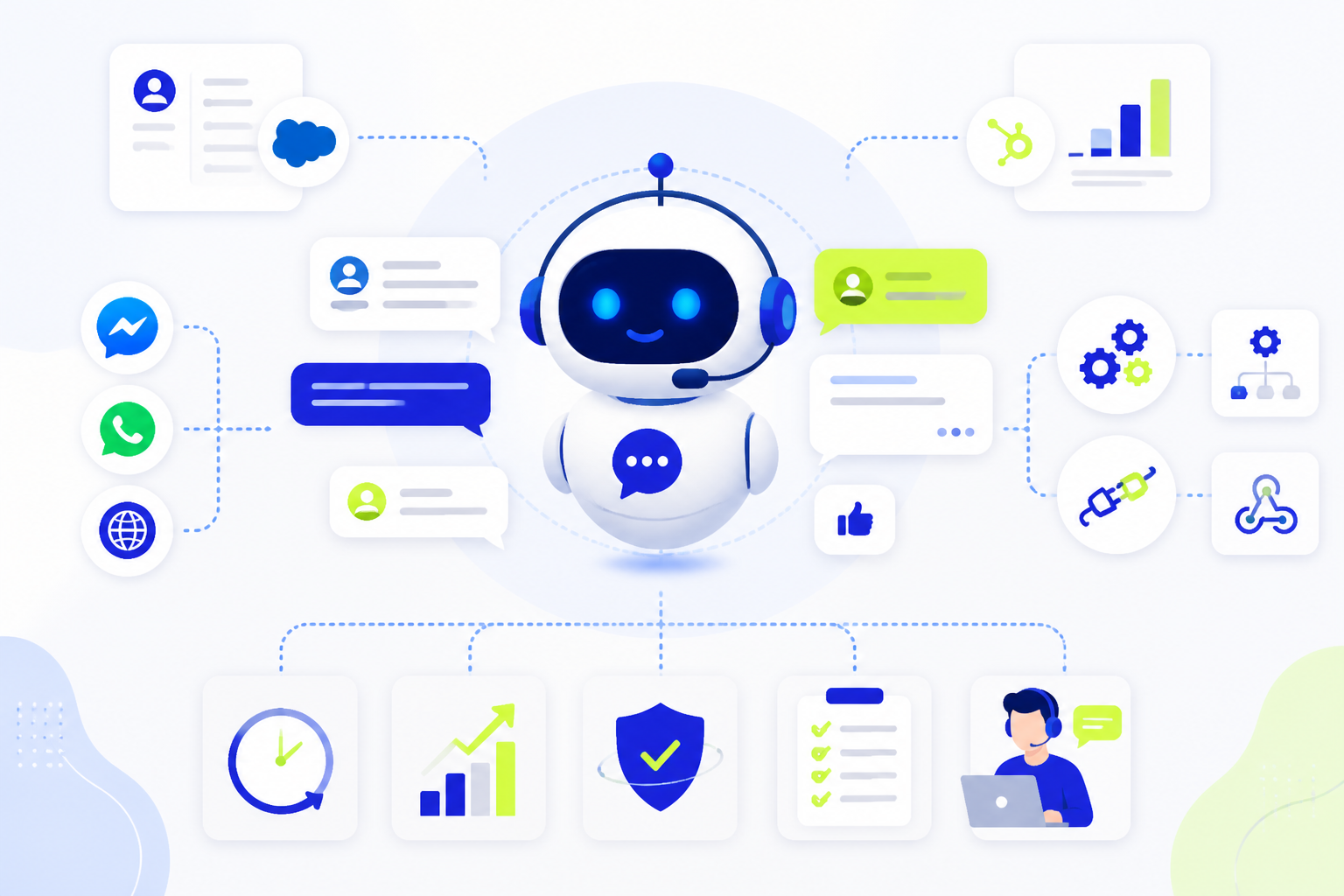
In short: why does business need AI agents for communications
The AI agentresponding to clients fasterqualify leads
AI agent in supportincrease the conversion rate of incoming applications
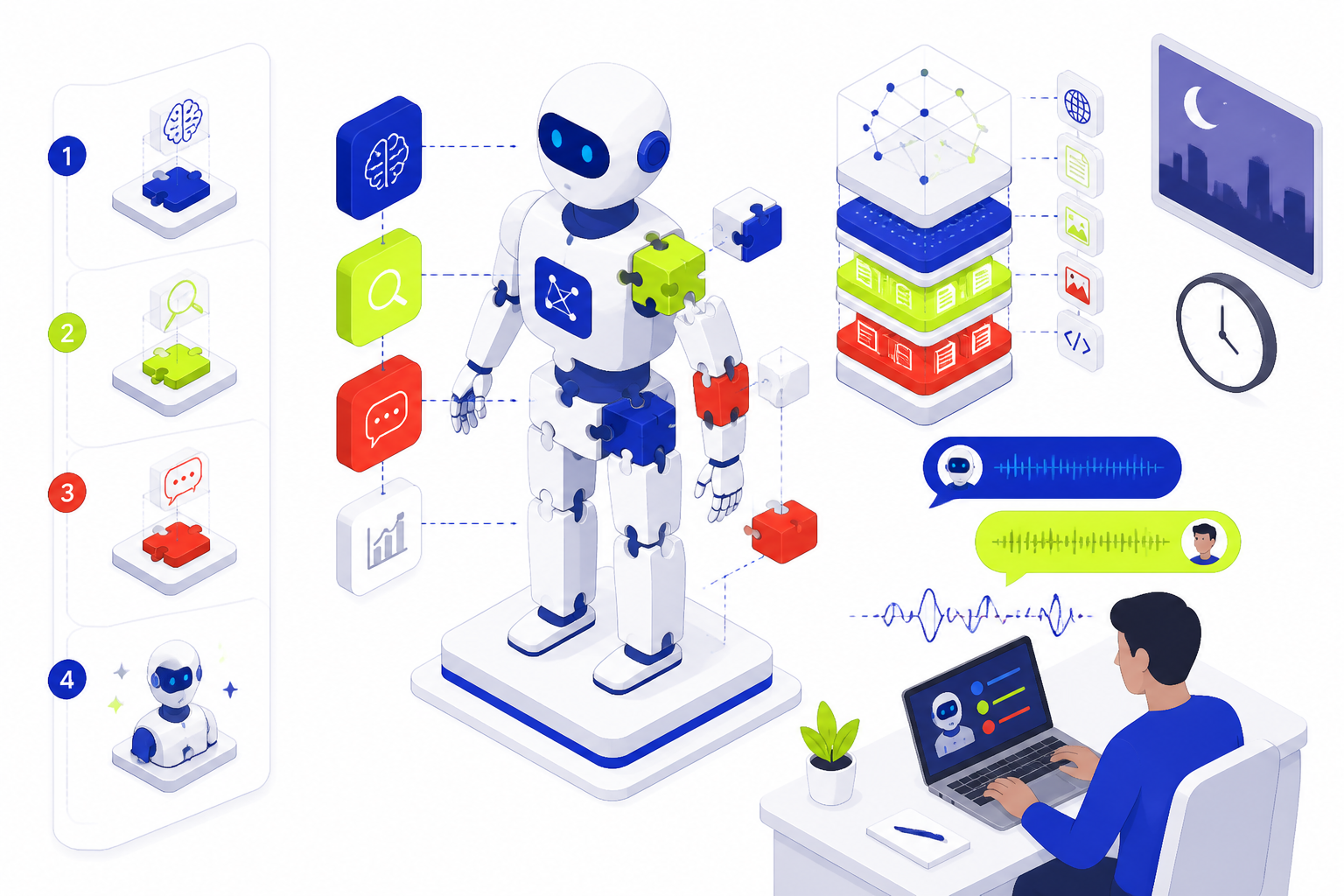
The main value of an AI agent is not that it "replaces the operator", but that it turns a chaotic flow of messages into a controlled process: with classification, priorities, logging, metrics and understandable escalation.
What is an AI agent in support and communications?
The AI agenttransfer data to CRM
NLP
Example: An online store receives 1,800 hits per month. About 45% are recurring questions about shipping, payment, refund, and availability. After the AI agent is launched, some of these requests are closed automatically, operators receive less routine, and the client does not wait for a response until the next business day. Even if the agent completely resolves only a third of the requests, this is already a significant time saving and improvement in the quality of service.
Who can benefit from an AI agent: roles, industries, and tasks
AI Business Manager
For the support manager, an AI agent is a way to reduce the workload on the first line and standardize responses. For a commercial director, it is a tool that does not lose applications at night, on weekends and during peak demand periods. For a marketer, it is a source of data about real customer questions, objections, and barriers to purchase. For the owner, it is a transparent system where you can see how many requests have been received, what topics are being repeated, where money is being lost, and how the conversion rate is changing.
- E-commerce:
- Car dealerships and dealers:
- Services and services:
- B2B companies:
- Education:
A good AI agent doesn't have to pretend to be human. Customers are more comfortable with automation when it is honest, fast, and useful. If the agent is not sure, he is obliged to convey the dialogue to the employee, and not "hallucinate" the answer. It is this combination of automation plus human control that makes the system reliable.
Process automation and practical cases
AI agent operator
One of the most common scenarios is ticket processing. The client writes: "The order has not arrived, what should I do?" The agent clarifies the number, checks the status through the API, explains the current situation, creates a request to the delivery service and informs the expected response time. If there is a conflict in the data or the client is emotionally unhappy, the dialogue is transmitted to the operator with a brief summary.: what happened, what data has already been collected, and what next step is needed.
In sales, the agent helps not to lose warm requests. For example, a website visitor asks the cost of CRM implementation. Instead of a dry "leave the phone", the agent specifies the size of the team, the current CRM, channels of requests, desired integrations and deadlines. The manager does not receive an empty contact, but a qualified lead: the company, the task, the budget range, the urgency, the source of the request and a brief history of the dialogue.
Another strong scenario is responses to reviews and incoming messages in public channels. The agent can prepare a draft response in the brand's tone, highlight negative messages, assign priority, and send disputed cases for approval. This is especially useful for network companies, where it is important to maintain a unified communication style.
Ready-made solutions, market, and selection criteria
an AI chatbot for a website
A ready-made subscription is a convenient quick start. You can usually connect a widget to a website, download a knowledge base, set up a greeting, and start the pilot in a few days. The downside is restrictions on logic, integrations, data storage, and customization. The constructor is suitable if you need a predictable scenario funnel with multiple AI inserts. A custom agent is more expensive at the start, but it better takes into account internal processes, CRM, SLA, access rights and security requirements.
When choosing a solution, it is important to look beyond just a beautiful demonstration. Check how the agent works with your real conversations, whether he knows how to transfer the conversation to the operator, whether he supports training on company documents, how responses are logged, whether it is possible to set up a ban on dangerous topics, whether there is analytics on intents and quality metrics.
Practical criterion: if you have up to 300 requests per month and simple questions, start with a SaaS or a construction site. If there are thousands of requests, there is CRM, order statuses, personal data, several departments and SLA requirements, it is more reasonable to design a full-fledged architecture with API, webhook events, monitoring and human-in-loop.
Comparison: functionality, price, platforms
The cost of an AI agent consists of a subscription, the number of dialogues, the cost of queries to the model, integrations, knowledge base settings, maintenance, and improvements. Tariffs may vary from one provider to another: some consider active operators, others the number of messages, and others the number of channels or CRM connectors.
| Approach | Functional | The price model | Integrations | Willingness to learn | Approximate budget |
|---|---|---|---|---|---|
| SaaS widget for a website | FAQ, answers on the knowledge base, transfer to the operator | Subscription + dialog limit | Website, messengers, basic CRM | Average: uploading documents and URLs | From several thousand rubles per month |
| Bot Constructor | Scripts, buttons, forms, simple AI logic | Subscription by channels and users | Popular messengers and CRM | Limited, depends on the platform | Low or medium starting budget |
| LLM agent for business processes | Dialog, Classification, API actions, Summary, routing | Development + infrastructure + model requests | REST API | High: documents, markup, scripts, tests | Medium or high budget |
| Turnkey development | Full customization, security, analytics, SLA | Project cost + maintenance | Any available APIs and internal systems | Maximum with the right technique | From the pilot's budget to the corporate project |
Manager's AI
Development and launch: order or assemble yourself
create a bot for a website
Self-assembly is suitable if the team has a technical specialist, a clear process, and a limited set of scenarios. You can use the constructor, connect the knowledge base, set up the application form, and test the hypothesis. The development order is justified when complex integrations, personal data processing, non-standard business logic, response quality control and regular support are needed.
The minimum terms of reference should include: communication channels, a list of scenarios, user roles, data sources, CRM requirements, escalation rules, prohibited topics, brand tonality, quality metrics, logging and reporting requirements. Without this, the contractor can create a beautiful demo bot that does not work well in the real flow of requests.
An example of a problem statement: "We need an AI assistant agent for the website and Telegram, who answers questions about tariffs, qualifies leads by 6 parameters, creates a deal in amoCRM, transmits complex questions to the manager and generates a daily report on intents, conversions and unanswered requests."
Implementation plan and ROI calculation
It is better to conduct the implementation of an AI agent as a managed project, rather than as a "let's connect a neural network" experiment. The optimal pilot takes from 3 to 8 weeks: first, a narrow scenario is selected, then data is prepared, a prototype is created, integrations are connected, testing is carried out, after which the agent is launched on a limited audience.
| Stage | Term | Responsible persons | Result |
|---|---|---|---|
| Audit of requests | 3-5 days | Head of Support, analyst | Top intentions, frequency, pain points |
| Data preparation | 1-2 weeks | Product expert, content Manager | Knowledge base, FAQ, Response rules |
| The prototype | 1 week | Developer, AI specialist | Working scenario and test agent |
| Integration | 1-3 weeks | Developer, CRM administrator | Data transfer to CRM, webhooks, widget |
| Test and pilot | 1-2 weeks | QA, Operators, Head of Department | Quality metrics and a list of improvements |
| Launch and monitoring | Constantly | The owner of the process | Reports, improvements, SLA control |
ROI = (savings + additional profit − costs) / costs × 100%
Example: a company receives 2,000 requests per month. The average processing time is 6 minutes. The agent closes 35% of requests without an operator. That's 700 hits × 6 minutes = 4,200 minutes, or 70 hours per month. If an operator's hour with taxes and overhead costs 600 rubles, the savings amount to 42,000 rubles. If the agent additionally brings in 10 sales per month with a margin of 5,000 rubles, the effect is another 50,000 rubles. At a cost of 60,000 rubles per month, the ROI will be about 53%.
Technical integration: website, API, webhooks and CRM
A web bot for a website
<script>
  window.aiAgentConfig = {
    projectId: "site-support",
    userId: "{{visitor_id}}",
    crmSource: "website",
    locale: "ru"
  };
</script>
<script src="https://example.com/ai-agent-widget.js" async></script>
An example of a REST request for creating a request might look like this:
POST /api/tickets
Content-Type: application/json
Authorization: Bearer API_TOKEN

{
"client_name": "Ivan",
  "channel": "website",
  "intent": "delivery_status",
  "order_id": "A-10452",
  "summary": "The customer asks about the delay in delivery",
  "priority": "medium"
}
For Bitrix24, incoming webhooks or a REST application are usually used: the agent creates a lead, deal, or task, applies the text of the dialog, and appoints a responsible person. For amoCRM, the scenario is similar: a deal is created in the right funnel, fields are filled in, and a note with a summary of the conversation is added. In HubSpot, an agent can create a contact, deal, and ticket, as well as update the lifecycle stage based on qualification results.
It is critically important to consider deduplication of leads. If one customer wrote on the website, then in the messenger, and then on Avito, the system should recognize the match by phone, email, or other identifier, rather than creating three separate transactions. Otherwise, managers will argue for leads, reports will be distorted, and the client will receive several inconsistent responses.
Avito Automation: opportunities, rules and risks
bot for Avito messages
The safe way is to use the official features of the platform, partner integrations, or allowed APIs, if they are available for a specific account type and scenario. This approach reduces the risk of blockages, better conforms to data processing rules, and allows for sustainable integration. An alternative option is browser automation, when the system simulates user actions in the interface, but it carries more technical and legal risks.
Avito Warning:
The right AI agent for Avito should respond only to incoming requests, comply with limits, take into account the context of the ad, not mislead the client, record consent for further communication if necessary, and transfer data to CRM carefully. It is better to start with semi-automatic mode: the agent prepares a response and a lead card, and the manager confirms sending in disputed cases.
Training, testing, and quality metrics
Start by marking up historical dialogues. Highlight the user's intentions: "find out the price", "check the order", "make a refund", "sign up for a service". Mark the entities — the specific data that the agent should extract: order number, city, date, budget, model, name, phone number. NER, or named entity recognition, helps the system turn free text into structured fields.
FCRCSAT
It is better to do testing in several layers. First, there are a set of control questions, then there are scenarios with ambiguous formulations, then there are negative tests where the client asks for the impossible or violates the rules. After that, an A/B pilot is launched: part of the traffic goes through the agent, part remains in the normal process. This way you can see the real effect, not just the impression of the demo.
Human-in-loop, escalation and quality control
Human-in-loop
A good escalation scheme looks like this: the agent determines the intent, evaluates confidence, checks the availability of data, responds himself or transmits it to the operator. During the transfer, he forms a resume.: who is the client, what has been asked, what data has already been collected, what answers have been given, and what needs to be done next. This saves the operator time and does not force the client to repeat everything all over again.
Quality control should be regular. The support manager or the process owner reviews a selection of dialogues, notes errors, updates the knowledge base, adds new intents and corrects prompta. Without such a cycle, the agent gradually becomes obsolete: tariffs, promotions, delivery terms, regulations, and product line change.
Security, data, and compliance
AI agents work with communications, which means they often see personal data: names, phone numbers, addresses, order numbers, complaints, agreements, and commercial information. Therefore, safety should be discussed before launch, not after the first incident. It is important to determine where the logs are stored, who has access to the dialogs, what data is sent to the model, and how long it is stored.
For companies working with clients from different jurisdictions, it is necessary to take into account the requirements of GDPR, Russian legislation on personal data and internal security policies. A practical approach is data minimization: the agent receives only what is needed for the task. Sensitive fields can be masked, depersonalized, or not transmitted to external services unnecessarily.
It is also useful to set up access roles. The operator sees his dialogues, the head sees the department's analytics, the administrator sees integration settings, and the developer should not have constant access to personal customer data. Logging is important not only for debugging, but also for auditing: if the client receives an incorrect response, you need to understand why this happened.
How to avoid implementation errors
The third mistake is an attempt to completely remove a person from the process. There will always be exceptions in communications: dissatisfied customer, non-standard contract, technical failure, disputed refund, VIP client, legal risk. If you don't set up human-in-loop, the agent will start taking on more than it should, and the cost of the error may be higher than the savings.
Another problem is the lack of a process owner. An AI agent needs a responsible one: a person who monitors quality, updates knowledge, analyzes reports, coordinates changes, and decides which scenarios to automate next. Without an owner, even a good system is quickly covered with digital dust.
Templates: Technical specifications, intentions, promptas, and dialogues
To speed up the start, it is useful to prepare a set of materials: an example of a technical specification, a list of intents, LLM prompta, test scripts and a dataset template. These documents don't have to be perfect from day one. Their task is to make expectations explicit and turn the implementation from a "we want a smart bot" conversation into a manageable job.
Example of JSON intents
{
"intents": [
{
"name": "price_request",
"description": "Customer wants to know the cost of the service",
"required_entities": ["service_type", "company_size", "contact_phone"],
      "fallback": "transfer_to_sales"
    },
    {
"name": "delivery_status",
"description": "Customer asks for order status",
"required_entities": ["order_id"],
      "fallback": "create_support_ticket"
    }
  ]
}
An example of a system prompt
You are an AI support assistant for the company. Answer briefly, politely, and according to the knowledge base. If there is not enough information, ask a clarifying question. Do not promise discounts, terms and conditions that are not included in the regulations. If the client is unhappy, asks for individual conditions, or the issue is related to money, send the dialog to the operator and create a resume.Example of a dialog
Client: Good afternoon, how much does it cost to implement an AI bot for a website?
Agent: Good afternoon! The cost depends on the number of channels, integrations, and scenarios. Can you tell me where the bot should work: only on the website or also in messengers and CRM?
Client: Website and amoCRM.
Agent: Understood. Does the agent only need to collect applications or also respond to the knowledge base and qualify leads?
Client: Respond and send leads to managers.
Agent: Great, I've fixed: website + amoCRM, knowledge base responses, qualifications, and lead transfer. I can send the request to a specialist to assess the deadlines and budget.
For the launch checklist, include the required items: approved scenarios, knowledge base, test set of questions, CRM connection, escalation rules, data policy, metrics, responsible for monitoring, rollback plan and a list of prohibited topics.
FAQ
Will the AI agent completely replace the support?
Usually not. It closes typical requests, speeds up the first response, and prepares data for the operator. A complete replacement is possible only in very narrow and formalized scenarios where the risks of error are minimal.
How much does it cost to implement an AI manager?
The cost depends on the channels, the number of dialogues, integrations, security requirements, and the amount of customization. A simple widget can be launched by subscription, while a custom project with CRM, API, analytics, and training requires a separate development and maintenance budget.
Is it possible to connect an AI bot to a website quickly?
Yes, if you need a basic widget with FAQ and request submission. But for a high-quality result, you still need a knowledge base, scenarios, tests, and setting up escalation rules. A quick launch without preparation often leads to a beautiful but useless chat.
How can I tell if the agent is responding correctly?
We need test suites, random verification of dialogues, metrics for the accuracy of intents and entities, CSAT, the proportion of escalations, and an analysis of operator corrections. Quality should be measured regularly, especially after changes in products and tariffs.
What should I do if the agent made a mistake?
It is important to save logs, quickly transfer controversial dialogue to a person, correct the knowledge base and add a new test scenario so that the error does not repeat. An error should become a learning material for the system, not just an unpleasant episode.
Conclusion
AI agents for communications are becoming a normal part of customer service and sales. They help businesses respond faster, avoid losing requests, reduce the burden on operators, and see the real picture of requests. But success depends not on the model itself, but on the quality of implementation: data, scenarios, integrations, metrics, security, and human involvement in complex cases.
It's better to start with a specific scenario: first-level support, lead qualification, a web bot for the site, instant messenger responses, or careful automation of incoming messages from sites like Avito. Then you need to measure the effect, refine the knowledge base, connect CRM, set up monitoring, and gradually expand the agent's area of responsibility. This way, AI becomes not an experiment for the sake of a trend, but a working tool that helps a company to talk to customers faster, more accurately and more humanely.
 Автор
Антон Амосов
Автор
Антон Амосов


Related articles
Top 10 platforms for building AI agents: what's inside each service
Terms of reference for an AI agent: template, structure and examples of formulations
How to create an AI agent: clear architecture, tools, and typical errors

GPT-6 Astra: a breakthrough to AGI or thoughtful marketing?
AI Agent Constructor: what is really possible to assemble without a programmer and where is the code needed?